
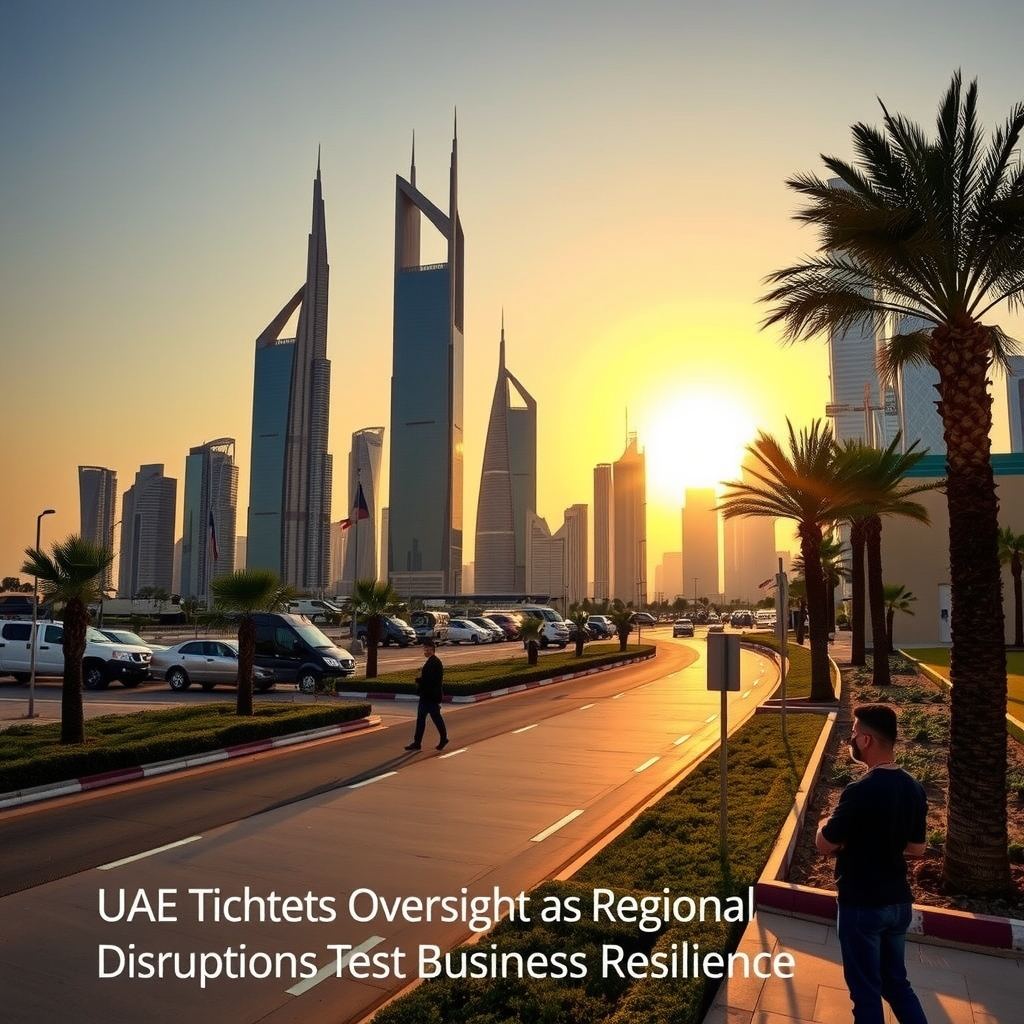
The United Arab Emirates is confronting a trio of operational setbacks that span education, aviation and energy logistics. While each event originates in a different arena, together they underscore the need for tighter risk controls and faster response mechanisms across the Gulf’s most diversified economies. For investors, regulators and corporate leaders, the message is clear: resilience must be built into every layer of the business environment.
Education Attendance Policy Strengthens Domestic Stability
Dubai’s private‑school network will now be required to flag any student who is absent for five straight days without a documented reason. The move, announced by the Knowledge and Human Development Authority, aims to curb chronic absenteeism and to provide early warning signs of broader social issues. According to The National (UAE) via GNews, schools must submit the attendance data to the authority, which will then follow up with families and, if necessary, social‑service agencies.
The policy is expected to generate several ripple effects for the local economy. First, higher attendance rates improve educational outcomes, which in turn enhance the skill pool feeding the UAE’s knowledge‑based sectors such as fintech, renewable energy and artificial intelligence. Second, the data‑collection requirement creates a modest demand for school‑management software and analytics platforms, offering a niche growth opportunity for local tech firms. Finally, the increased oversight aligns with the broader government agenda of ensuring social cohesion and long‑term human‑capital development, key pillars of the UAE Vision 2030.
- Mandatory reporting of five‑day unexplained absences
- Centralised data review by the Knowledge and Human Development Authority
- Potential partnership opportunities for ed‑tech providers
Aviation Outage Highlights Need for Contingency Planning
A massive technical failure forced a major U.S. carrier to halt operations for several hours, delaying thousands of passengers and cargo shipments. Khaleej Times (UAE) via GNews reported that the outage, caused by a cascading systems glitch, will take days to fully resolve. Although the incident occurred overseas, its impact reverberates in the Gulf, where Emirates, Etihad and other regional airlines rely on seamless trans‑Atlantic connections for both tourism and business travel.
The disruption serves as a cautionary tale for UAE carriers and logistics firms. With the UAE positioned as a global hub, any interruption in partner airlines can affect hotel occupancy, retail sales and even the timing of high‑value cargo such as pharmaceuticals. Companies are therefore re‑examining their contingency frameworks, including diversified routing options, real‑time monitoring tools and insurance coverage for revenue loss.
Key takeaways for the aviation sector include:
- Strengthening IT redundancy across airline reservation and baggage‑handling systems.
- Expanding code‑share agreements with carriers that operate alternative hubs.
- Investing in predictive‑maintenance platforms that can flag potential failures before they cascade.
Oil‑Tanker Incidents Prompt Review of Shipping Risk
In a separate development, two oil tankers ignited after striking sea mines in the Strait of Hormuz, a vital artery for global energy shipments. The National (UAE) via GNews cited a regional security agency that confirmed the incidents, noting that the vessels suffered extensive damage and required immediate firefighting response. While the exact origin of the mines remains unverified, the episode raises immediate concerns for the GCC’s oil export routes and for insurers underwriting maritime cargo.
For the UAE, which imports a significant share of its refined petroleum products and hosts a thriving ship‑repair industry, the incident underscores the importance of maritime risk assessment. Shipping companies are likely to revisit their route‑planning algorithms, incorporate real‑time threat intelligence and consider alternative corridors such as the longer but safer route around the Cape of Good Hope for high‑value cargo. Moreover, the events could accelerate the adoption of autonomous monitoring drones and satellite‑based detection systems, technologies that several UAE start‑ups are already piloting under the Dubai Future Foundation’s innovation programmes.
Potential strategic responses include:
- Enhancing collaboration with international naval patrols to secure chokepoints.
- Expanding insurance pools that specifically cover mine‑related losses.
- Leveraging AI‑driven analytics to predict and mitigate maritime threats.
### Looking Ahead
The convergence of education, aviation and energy disruptions signals a broader shift toward proactive governance and private‑sector agility in the UAE. Stakeholders are expected to invest in digital tools that provide early warnings, while regulators will likely tighten reporting standards across sectors. For investors, the emerging landscape offers both risk and opportunity: firms that can demonstrate robust contingency planning and that align with the UAE’s resilience agenda may capture a larger share of the market as the Gulf continues to position itself as a stable hub for global trade and talent.