
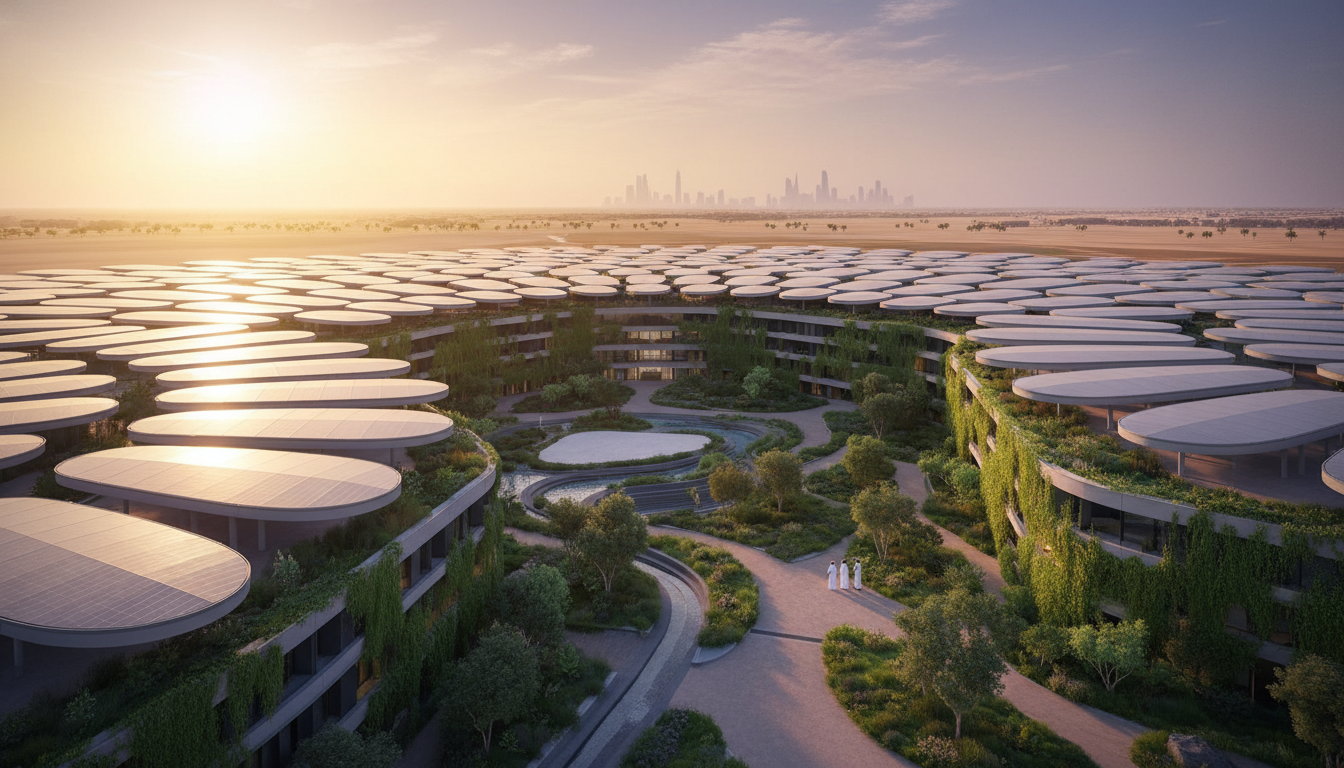
The United Arab Emirates used World Environment Day as a platform to underline its expanding sustainability agenda. Government ministries, private firms and research institutes gathered in Dubai to announce a series of initiatives that aim to accelerate the transition to a low‑carbon economy and to cement the UAE’s reputation as a climate‑leadership hub in the Gulf.
New Renewable‑Energy Commitments
The Ministry of Climate Change and Environment confirmed that the national renewable‑energy capacity will reach 50 GW by 2035, up from the current 30 GW. The target is backed by a fresh incentive scheme that offers reduced licensing fees for solar and wind projects exceeding 100 MW. In addition, the Emirates Water and Electricity Authority (EWEC) introduced a fast‑track approval process for offshore wind farms in the Persian Gulf, a move that could add another 5 GW of clean power within the next decade.
Private sector players responded quickly. A consortium led by Masdar and ADQ announced a AED 4 billion investment in a hybrid solar‑storage hub near Al Dhafra. The facility will integrate lithium‑ion batteries capable of delivering 2 GW of dispatchable power, helping to balance the grid as intermittent sources grow. Meanwhile, DEWA unveiled a smart‑meter rollout that will cover 1.2 million households by the end of 2027, enabling real‑time demand management and encouraging consumers to shift usage to off‑peak periods.
Circular‑Economy and Waste Management
Beyond energy, the UAE highlighted progress in waste reduction and resource circularity. The Federal Authority for Nuclear Regulation unveiled a pilot program that converts municipal solid waste into bio‑fuels using plasma gasification. Early trials suggest a conversion efficiency of 70 percent, enough to supply diesel‑equivalent fuel for a fleet of 500 public‑transport buses.
In Abu Dhabi, the Khalifa Fund for Enterprise Development launched a grant scheme worth AED 150 million for startups developing recyclable packaging solutions. The fund targets companies that can replace single‑use plastics with biodegradable alternatives derived from locally sourced algae. One recipient, EcoWrap, plans to produce 200 tonnes of seaweed‑based film per year, a volume that could offset roughly 1,200 tonnes of plastic waste annually.
Green Finance and International Collaboration
The financial sector also featured prominently. The Dubai Financial Market (DFM) introduced a green‑bond index that tracks the performance of UAE‑issued sustainability‑linked securities. The index’s inaugural composition includes bonds from Emirates NBD, Abu Dhabi Commercial Bank and the Dubai Electricity and Water Authority, collectively raising USD 1.2 billion for climate‑focused projects.
Internationally, the UAE signed a memorandum of understanding with the European Union to share best practices on carbon‑capture technology. The agreement will facilitate joint research in Abu Dhabi’s Masdar Institute, focusing on scaling up direct‑air‑capture plants that could remove up to 1 million tonnes of CO₂ per year by 2030.
What to Watch
The announced measures signal a shift from ambitious targets to concrete implementation. Investors will be watching how quickly the renewable‑energy pipeline fills, especially the offshore wind licences that could reshape the Gulf’s energy mix. The success of the waste‑to‑fuel pilot will also be a litmus test for circular‑economy models in arid environments.
Regulators are expected to tighten reporting standards for ESG disclosures, aligning with the International Sustainability Standards Board (ISSB) framework that the UAE plans to adopt by 2027. Companies that lag in compliance may face higher financing costs as green‑bond demand grows.
Overall, the UAE’s World Environment Day agenda reflects a coordinated effort across public and private sectors to embed sustainability into the core of the economy. If the announced projects stay on schedule, the nation could achieve its 2050 net‑zero goal ahead of many peers, reinforcing its position as a climate‑action leader in the Middle East.