
The United Arab Emirates is turning to artificial‑intelligence to reinforce its energy infrastructure while meeting ambitious climate targets. Recent pilots in Dubai and Abu Dhabi demonstrate how AI‑driven analytics can smooth demand spikes, improve renewable integration and reduce carbon footprints, positioning the UAE as a regional leader in sustainable power.
AI‑Powered Grid Management
Traditional grid operations rely on static forecasts and manual adjustments, which can leave the system vulnerable to sudden demand changes or renewable intermittency. By feeding real‑time data from smart meters, weather stations and satellite imagery into machine‑learning models, operators can predict load patterns with minute‑level accuracy. In Dubai, the Dubai Electricity and Water Authority (DEWA) has deployed an AI platform that balances solar output with battery storage, cutting curtailment losses by roughly 15 percent during peak sunshine hours. The system also flags potential overloads before they materialise, allowing pre‑emptive re‑routing of power and avoiding costly outages.
Optimising Renewable Assets
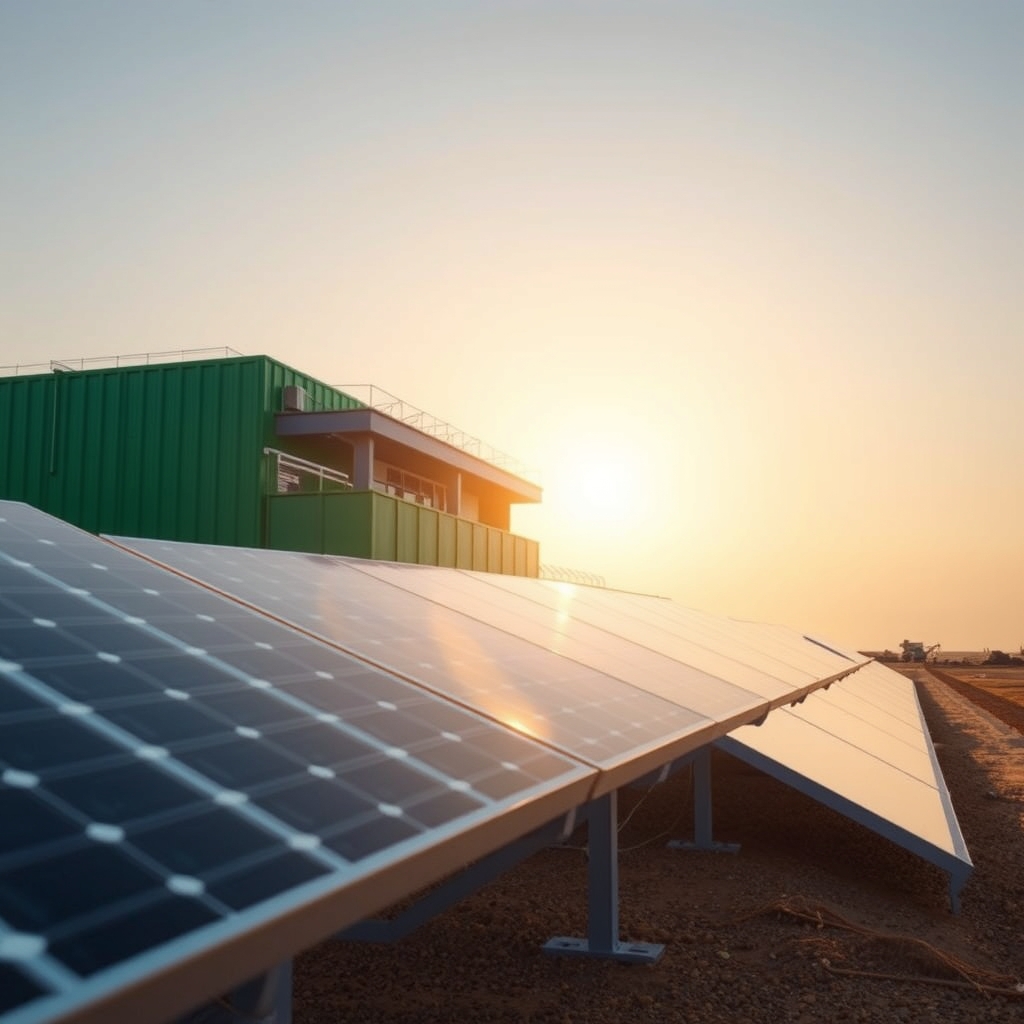
The UAE’s renewable portfolio, now exceeding 30 GW, includes large‑scale solar farms in the desert and offshore wind projects in the Gulf. AI helps maximise the yield of these assets by continuously adjusting panel tilt, cleaning schedules and inverter settings based on predictive weather models. Abu Dhabi’s Masdar City initiative reports a 7 percent boost in solar efficiency after integrating a neural‑network optimizer that learns from historical performance and real‑time cloud cover data. Similar tools are being tested on the Al Dhafra wind farm, where AI forecasts wind shear and turbine wear, extending equipment life while maintaining output.
Reducing Carbon Intensity
Beyond operational gains, AI contributes directly to emission reductions. Advanced analytics identify high‑emission processes within industrial clusters and suggest alternative energy mixes or process tweaks. In the Al Ain industrial zone, an AI‑driven audit revealed that shifting 20 percent of furnace power to on‑site solar could cut CO₂ emissions by 120,000 tonnes annually. The Ministry of Industry and Advanced Technology has pledged support for such AI‑based decarbonisation projects, earmarking AED 250 million for pilot programmes through 2028.
Building a Skilled AI‑Energy Workforce
The rapid rollout of AI solutions underscores a growing demand for talent that blends data science with energy expertise. Partnerships between local universities, such as Khalifa University, and industry players are creating specialised master’s programmes focused on AI for energy systems. Scholarships and on‑the‑job training schemes aim to equip Emirati engineers with the skills needed to develop, deploy and maintain these sophisticated tools, ensuring that the technology transfer remains within the national talent pool.
Investment Landscape and Future Outlook
Investors are taking note of the UAE’s AI‑energy convergence. Venture capital funds have allocated over AED 1 billion to startups that offer predictive maintenance, demand‑response platforms and carbon‑tracking software tailored to the Gulf market. Meanwhile, sovereign wealth entities are earmarking portions of their portfolios for AI‑enhanced renewable projects, viewing the technology as a risk‑mitigation layer that can protect returns in a volatile energy price environment.
Looking ahead, the UAE plans to embed AI across the entire energy value chain, from exploration and generation to distribution and consumption. The upcoming Gulf Energy AI Forum, scheduled for early 2027 in Abu Dhabi, will bring together policymakers, tech firms and academia to chart a roadmap for scaling these solutions regionally. Success will hinge on robust data governance, cybersecurity safeguards and continued public‑private collaboration.
What to watch: The next twelve months will reveal whether AI can consistently deliver the promised efficiency gains at scale. Key indicators include reductions in grid curtailment rates, measurable drops in sectoral emissions and the pace of capital flowing into AI‑energy ventures. If early pilots maintain their performance, the UAE could set a template for other oil‑rich economies seeking to diversify toward a low‑carbon future.