
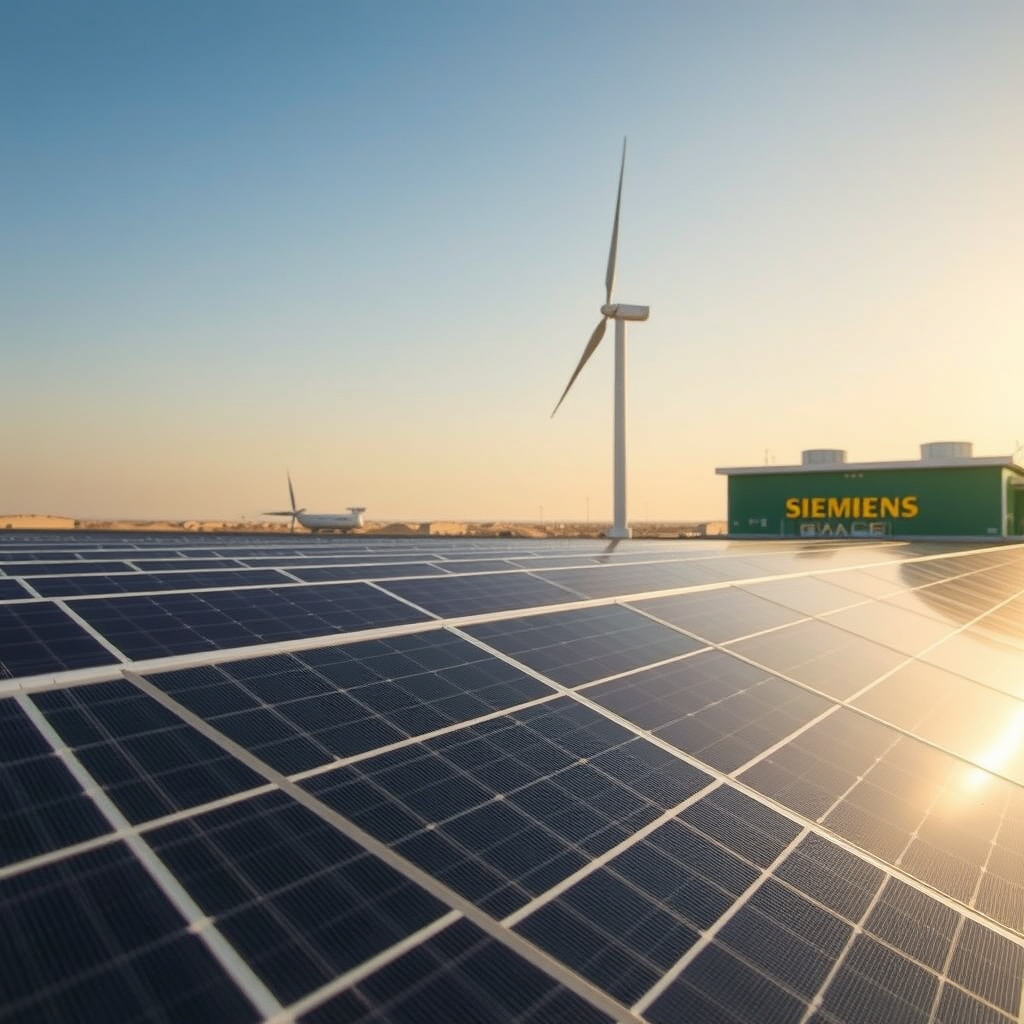
The UAE’s ambition to diversify its energy mix received a fresh boost on Tuesday as Siemens Energy secured the contract to deliver 2.6 GW of next‑generation turbines for the Taweelah C solar‑plus‑storage complex. The deal, valued at several hundred million AED, positions the German‑based firm at the heart of one of the region’s largest integrated renewable installations and underscores the Emirates’ commitment to scaling up low‑carbon power generation.
Strategic Fit Within the UAE’s Renewable Roadmap
Taweelah C is slated to combine over 1.5 GW of solar photovoltaic capacity with a 1.1 GW battery storage system, creating a flexible plant capable of delivering power around the clock. By integrating Siemens Energy’s turbine technology, designed for high efficiency and rapid response, the project will be able to smooth intermittency, provide grid‑stability services, and support the country’s target of achieving 50 % clean‑energy generation by 2030.
The contract aligns with the UAE’s broader Vision 2031, which calls for a substantial reduction in carbon intensity while maintaining reliable electricity supply for a growing economy. Local utilities, including DEWA, have highlighted the need for hybrid solutions that can complement traditional generation and reduce reliance on natural‑gas peaking plants. Siemens Energy’s turbines, equipped with advanced digital controls, will enable real‑time optimisation, helping the grid absorb variable solar output and dispatch stored energy when demand peaks.
Economic and Industrial Implications
Beyond the environmental upside, the agreement carries significant economic weight. The project is expected to generate more than 1,200 direct jobs during the construction phase and create a pipeline of skilled positions for operations and maintenance once the plant is online. Moreover, Siemens Energy has committed to sourcing a substantial portion of components from local manufacturers, fostering the development of a domestic supply chain for high‑tech renewable equipment.
Financial analysts project that the Taweelah C complex will contribute roughly AED 14.8 billion in annual revenue to the UAE’s power sector once fully operational. The infusion of foreign expertise combined with local participation is also set to accelerate knowledge transfer, positioning Emirati engineers to lead future renewable ventures across the GCC.
Technology Edge and Future Expansion
Siemens Energy’s turbine offering stands out for its modular design and integrated digital platform, which provides predictive maintenance alerts and performance analytics via cloud‑based dashboards. This capability reduces downtime and extends asset life, delivering a lower levelised cost of electricity (LCOE) compared with conventional solar‑only installations.
The contract includes an option for a second phase that could add up to 1 GW of additional capacity, should the initial rollout meet performance targets. Such scalability is critical as the UAE explores further hybrid projects in Abu Dhabi’s Al Dhafra region and Dubai’s upcoming energy‑storage hubs. Industry observers note that the success of Taweelah C could set a benchmark for similar initiatives throughout the GCC, where governments are increasingly courting private‑sector partners to meet ambitious clean‑energy goals.
Key figures at a glance
- Project capacity: 2.6 GW (1.5 GW solar + 1.1 GW storage)
- Contract value: Estimated AED 300‑350 million
- Job creation: Over 1,200 construction roles; 150+ permanent O&M positions
- Local content: Minimum 30 % of turbine components sourced from UAE suppliers
What to Watch
The next few months will reveal how quickly Siemens Energy can mobilise its supply chain and commence installation. Monitoring the integration of turbine control software with the plant’s energy‑management system will be crucial, as any delays could affect the projected commissioning timeline of late 2027. Additionally, the performance of the battery storage component will be a litmus test for the viability of large‑scale hybrid models in the region’s hot climate.
Investors and policymakers alike will be watching the plant’s output data once it goes live, seeking evidence that the combined solar‑turbine‑storage architecture can reliably meet peak‑hour demand while keeping costs competitive. If Taweelah C delivers on its promises, it could accelerate the UAE’s shift toward a more resilient, low‑carbon power grid and inspire further collaborations between international technology firms and local energy players.