
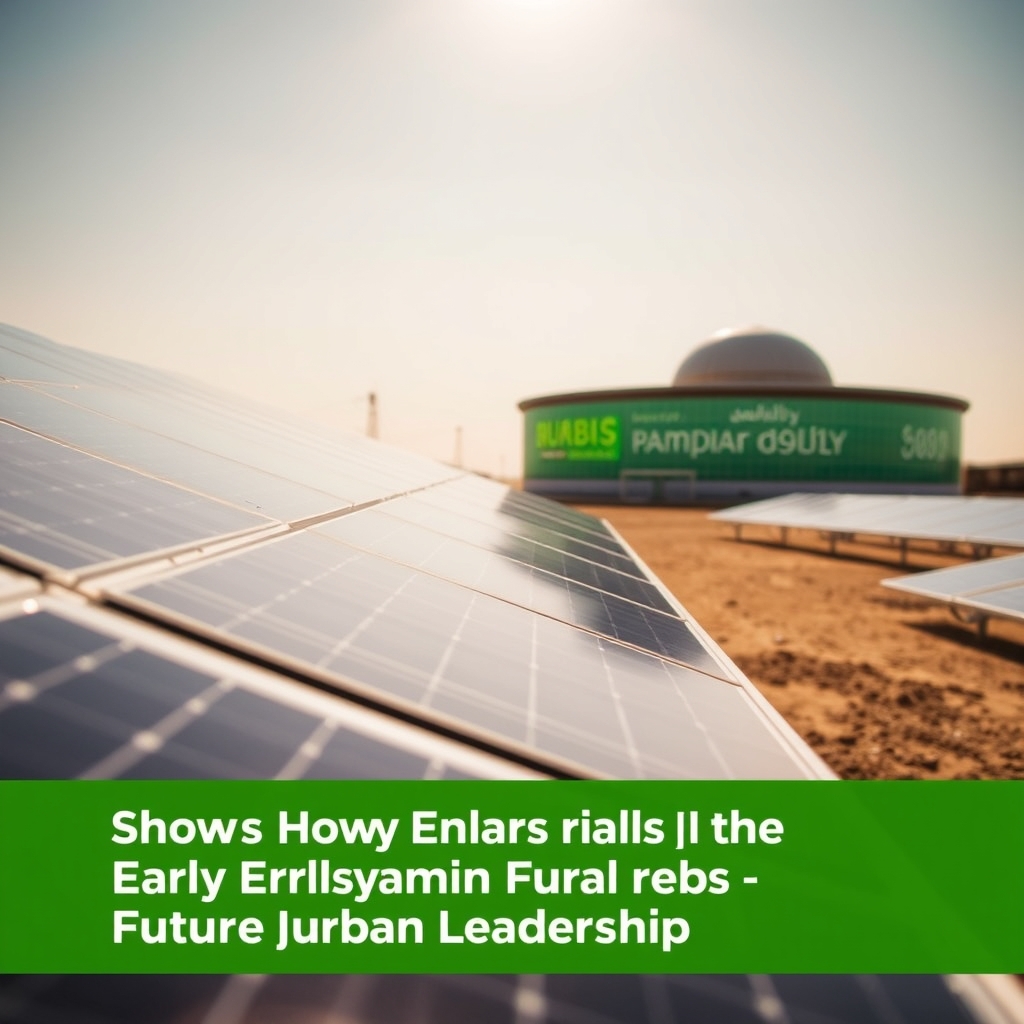
Masdar City, Abu Dhabi’s flagship low‑carbon district, is emerging as a practical case study for how cities can translate climate ambition into tangible economic and social benefits. While many municipalities announce long‑term green targets, Masdar has been implementing concrete measures for more than a decade, positioning the UAE as a regional leader in sustainable urbanism.
A Decade of Integrated Planning
From its inception, Masdar’s master plan combined renewable energy, water efficiency and digital infrastructure into a single framework. The district now hosts more than 2 GW of solar capacity, largely supplied by the on‑site 10 MW photovoltaic park and rooftop installations across commercial buildings. This energy mix reduces reliance on the national grid and cuts carbon emissions by an estimated 30 percent compared with conventional developments of similar size.
Water management follows the same integrated logic. Advanced grey‑water recycling and smart irrigation systems have lowered potable water demand by roughly 40 percent. These savings are not merely environmental; they translate into lower operating costs for tenants, making the district attractive to multinational corporations seeking both sustainability credentials and cost efficiency.
Smart‑City Technologies as Enablers
Beyond physical infrastructure, Masdar leverages data‑driven platforms to optimise resource use. A city‑wide IoT network monitors energy consumption, traffic flow and indoor air quality in real time. The data feeds an AI‑powered dashboard that allows facility managers to adjust lighting, HVAC and charging stations dynamically, shaving off additional kilowatt‑hours each month.
The integration of autonomous electric shuttles further reduces emissions while enhancing mobility for residents and workers. By 2025, the fleet is expected to carry more than 500 000 passengers annually, cutting private‑car trips by an estimated 15 percent. The technology stack is open‑source, encouraging other Gulf municipalities to adopt similar solutions without prohibitive licensing fees.
Economic Ripple Effects
Masdar’s sustainability blueprint is generating a cascade of economic opportunities. The district has attracted over 150 clean‑tech firms, ranging from solar panel manufacturers to carbon‑capture startups. Collectively, these companies have secured more than AED 2 billion in venture funding since 2022, signalling strong investor confidence in the UAE’s green ecosystem.
Job creation is another measurable outcome. The clean‑energy and smart‑city sectors now employ roughly 4 000 professionals within Masdar, with a projected increase of 30 percent over the next three years as new phases of construction and retrofitting commence. This talent pool supports the broader GCC ambition to diversify away from oil‑centric employment.
Replicability Across the Region
Masdar’s model offers a template that can be adapted to other Gulf cities facing similar climate constraints. Key takeaways include:
- Early stakeholder alignment , government, private investors and academic partners signed a joint sustainability charter before ground‑breaking, ensuring shared objectives.
- Modular infrastructure , phased deployment of solar, water‑recycling and IoT components allowed the city to scale without massive upfront capital outlays.
- Policy incentives , the Abu Dhabi government provided tax exemptions and expedited permitting for green‑building certifications, accelerating adoption.
Cities such as Riyadh and Doha have already announced pilot projects that mirror Masdar’s approach, suggesting a regional shift toward climate‑resilient urban planning.
What to Watch Next
The next milestone for Masdar is the completion of its “Zero‑Carbon Phase III” expansion, slated for 2028. This stage will introduce a district‑wide hydrogen‑fuel cell network to power public transport and backup energy storage. Observers will be keen to see how the integration of hydrogen influences operating costs and carbon metrics, potentially setting a new benchmark for low‑emission mobility in the Middle East.
In the broader context, Masdar’s progress underscores a growing consensus among Gulf investors that sustainability is no longer a peripheral concern but a core component of long‑term profitability. As more cities adopt early‑stage green frameworks, the UAE’s experience may become a reference point for policymakers and developers seeking to future‑proof their urban landscapes.