
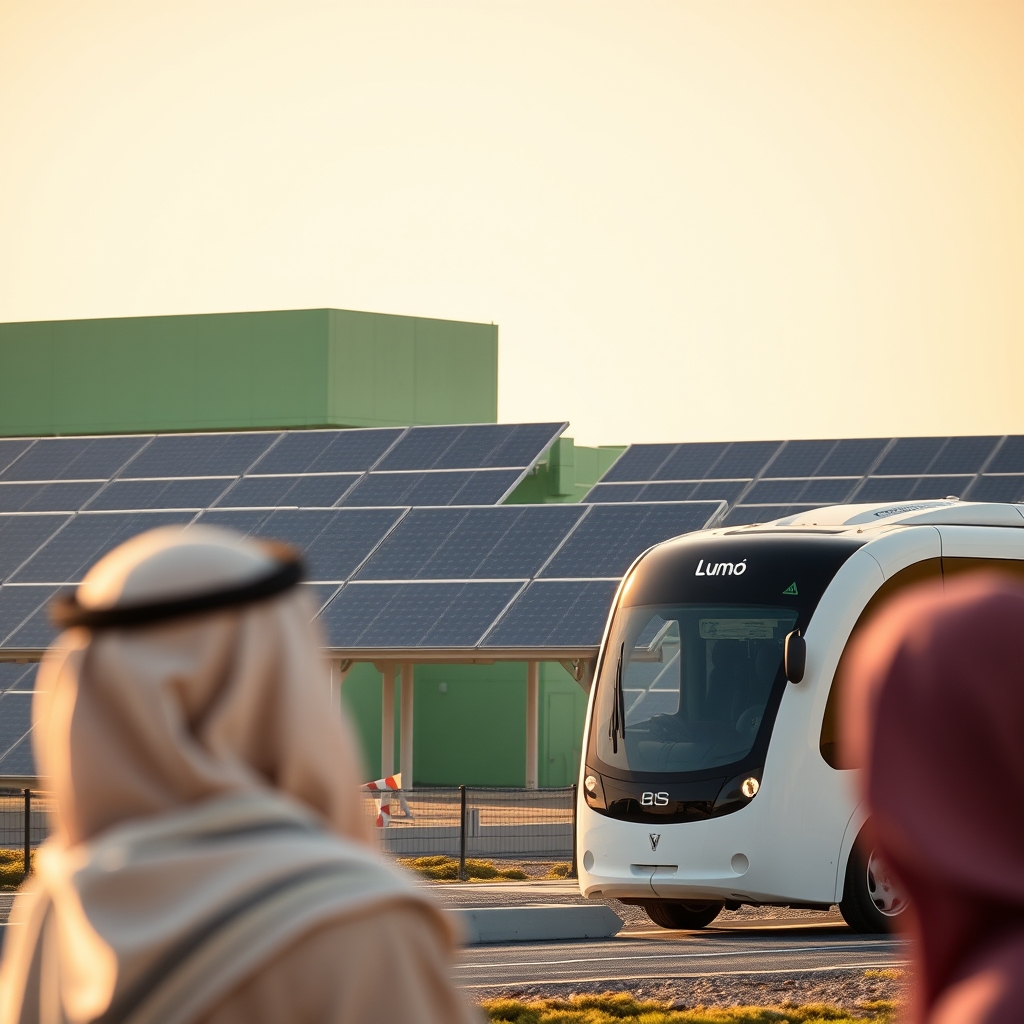
Abu Dhabi’s public‑transport arm has joined forces with Lumo, a European firm specializing in autonomous vehicle technology, to launch a trial of a driverless bus on a dedicated corridor in the capital. The pilot, which started this week, marks the first fully autonomous public‑transport vehicle deployed anywhere in the Middle East and North Africa. Officials say the project will generate data on safety, passenger experience and operational efficiency, while signalling Abu Dhabi’s ambition to embed cutting‑edge mobility solutions into its broader sustainability agenda.
Strategic Fit With Abu Dhabi’s Smart‑City Vision
The emirate has long positioned itself as a testbed for next‑generation urban infrastructure, from renewable‑energy grids to AI‑driven services. Introducing an autonomous bus aligns with the Abu Dhabi Economic Vision 2030, which calls for diversified, low‑carbon growth and the integration of digital technologies across public services. By collaborating with Lumo, the city taps into proven expertise without having to develop the hardware and software stack from scratch.
Key benefits outlined by the Abu Dhabi Mobility Authority include:
- Reduced emissions , electric propulsion eliminates tailpipe pollutants, supporting the emirate’s target of cutting transport‑related CO₂ by 30 percent by 2035.
- Operational cost savings , removing the driver component can lower labor expenses and enable more flexible service schedules.
- Data‑driven optimisation , real‑time telemetry will feed into the city’s traffic‑management platform, helping to smooth congestion on busy arterial routes.
The trial route runs between two major transit hubs, covering roughly 8 kilometres of mixed‑traffic streets equipped with high‑definition mapping sensors. Lumo’s bus relies on a combination of lidar, radar and camera arrays to perceive its surroundings, while a cloud‑based AI engine processes the data to make split‑second navigation decisions. Safety officers on the ground retain the ability to intervene remotely, ensuring that the pilot adheres to the UAE’s rigorous transport‑safety standards.
Economic and Industry Ripple Effects
Beyond the immediate environmental upside, the autonomous‑bus project is expected to stimulate a cluster of related activities in the UAE’s burgeoning mobility ecosystem. Local suppliers of charging infrastructure, vehicle‑to‑grid integration kits and data‑analytics services stand to gain contracts as the pilot scales. Moreover, the initiative could attract further foreign direct investment from firms seeking a regulatory environment that balances innovation with oversight.
The UAE’s Federal Transport Authority has already drafted a set of guidelines for driverless public transport, covering licensing, insurance and cybersecurity requirements. By piloting the technology under these emerging rules, Abu Dhabi offers a live case study that could accelerate the rollout of similar services in other emirates, such as Dubai’s upcoming autonomous shuttle corridors.
Industry observers note that the MENA region has lagged behind Europe and Asia in large‑scale autonomous public transport, largely due to regulatory uncertainty and infrastructure gaps. Abu Dhabi’s proactive stance may therefore position the UAE as a regional hub for testing and commercialising autonomous mobility solutions, potentially drawing research partnerships from universities in Saudi Arabia, Qatar and Oman.
Sustainability Impact and Public Reception
Early surveys of trial participants indicate a cautiously optimistic attitude toward driverless buses. Passengers appreciate the smooth acceleration and quiet cabin, while also valuing the visible commitment to greener travel. However, some riders expressed concerns about reliability during extreme heat, a factor that Lumo’s engineers have addressed by integrating robust thermal‑management systems into the vehicle’s electronics.
From a sustainability perspective, the autonomous bus complements Abu Dhabi’s broader clean‑energy push, which includes massive solar‑farm deployments and the expansion of electric‑vehicle charging networks across the emirate. By pairing electric, driverless buses with renewable‑powered charging stations, the city can create a closed‑loop system that maximises carbon reductions.
The trial’s data collection will also feed into the emirate’s carbon‑accounting framework, enabling policymakers to quantify the exact emissions saved per kilometre compared with conventional diesel buses. Such granular insight is essential for fine‑tuning incentives and for reporting progress toward international climate commitments.
What to watch next , The pilot is scheduled to run for six months, after which a comprehensive performance report will be published. Stakeholders will be looking for metrics on safety incidents, energy consumption, passenger load factors and cost per passenger kilometre. Positive outcomes could trigger a phased rollout across additional routes in Abu Dhabi and potentially inspire similar projects in neighboring GCC cities. The next phase may also see integration with the emirate’s broader Mobility‑as‑a‑Service platform, allowing users to book rides through a single app that combines autonomous buses, e‑scooters and ride‑hailing services. If the technology proves reliable and cost‑effective, it could become a cornerstone of the UAE’s strategy to deliver low‑carbon, high‑efficiency urban transport for the decade ahead.