
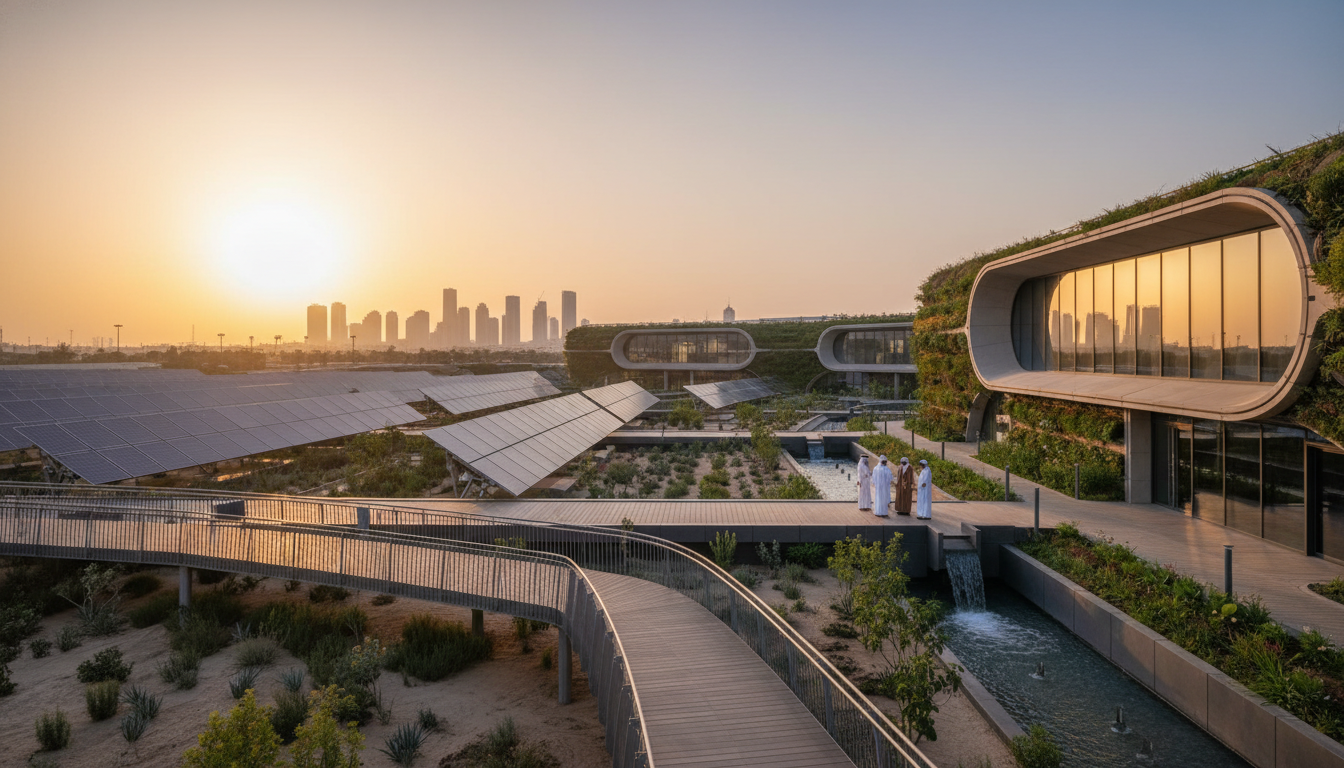
Abu Dhabi’s Department of Energy (DoE) hosted the third Water and Energy Majlis on 4 June, positioning the emirate as a regional hub for integrated resource strategy. Over 150 participants, from government ministries and utility firms to start‑ups and academic institutions, gathered to examine how the UAE can balance rising water demand with its clean‑energy transition. The forum underscored the emirate’s ambition to cut carbon intensity while securing a resilient water supply for a growing population and expanding industrial base.
Integrated Policy Frameworks
DoE officials highlighted recent regulatory updates that tie water‑intensive sectors to renewable‑energy targets. A new UAE Water‑Energy Nexus Strategy sets a goal of powering 70 percent of desalination plants with solar or wind by 2035. The framework also introduces incentives for utilities that adopt energy‑efficient reverse‑osmosis technology and for developers who embed water‑saving measures in new projects.
Key speakers, including the DoE’s director of sustainability, outlined three priority actions:
- Mandating renewable‑energy procurement for all new desalination capacity larger than 50 MGD.
- Introducing tiered tariffs that reward water‑intensive users for reducing consumption during peak electricity periods.
- Launching a joint research fund of AED 150 million to accelerate pilot projects on hybrid solar‑thermal desalination and AI‑driven demand forecasting.
These measures aim to align the UAE’s water security objectives with its Net‑Zero 2050 pledge, ensuring that progress in one sector does not undermine the other.
Technological Innovation and Private‑Sector Participation
The Majlis showcased a slate of emerging technologies that could reshape the water‑energy landscape. Notable presentations included:
- Solar‑powered reverse‑osmosis modules developed by a Dubai‑based clean‑tech start‑up, promising a 30 percent reduction in energy consumption per cubic metre of water produced.
- Floating photovoltaic (FPV) arrays installed on the Al‑Maqta water reservoir, delivering 12 MW of clean electricity while shading the water surface to reduce evaporation.
- AI‑enabled predictive analytics from a Abu Dhabi university consortium, capable of forecasting water demand spikes up to 48 hours in advance, allowing utilities to optimise generation schedules.
Private‑sector representatives welcomed the policy clarity, noting that predictable incentives reduce financing risk. A senior executive from ADNOC Distribution remarked that the nexus strategy “creates a clear pathway for capital deployment in low‑carbon water infrastructure, which is essential for long‑term asset viability.”
Regional Collaboration and Knowledge Transfer
While the event centred on UAE initiatives, it also served as a platform for Gulf‑wide cooperation. Delegates from Saudi Arabia, Qatar and Oman shared experiences on brine‑mineral recovery and wastewater reuse. The DoE announced a memorandum of understanding with the Saudi Ministry of Energy to pilot a joint solar‑desalination plant in the Red Sea corridor, targeting a combined capacity of 200 MGD by 2029.
The Majlis concluded with a call for a GCC Water‑Energy Forum to be held biennially, fostering cross‑border data sharing and harmonised standards. Such collaboration could unlock economies of scale, lower project costs and accelerate the region’s collective shift toward sustainable resource management.
What to Watch
The outcomes of the third Water and Energy Majlis set the stage for several market developments. Investors should monitor the rollout of renewable‑energy contracts for desalination, as they are likely to generate new opportunities for EPC firms and equipment manufacturers. Additionally, the AI‑driven demand‑forecasting tools presented may spur a wave of digital‑infrastructure contracts, positioning UAE tech firms as regional leaders.
Regulators are expected to refine tariff structures in the coming months, translating policy intent into actionable pricing signals. Stakeholders who align early with the nexus strategy, whether through technology adoption, joint ventures or research partnerships, will be best placed to benefit from the UAE’s push toward a low‑carbon, water‑secure future.