
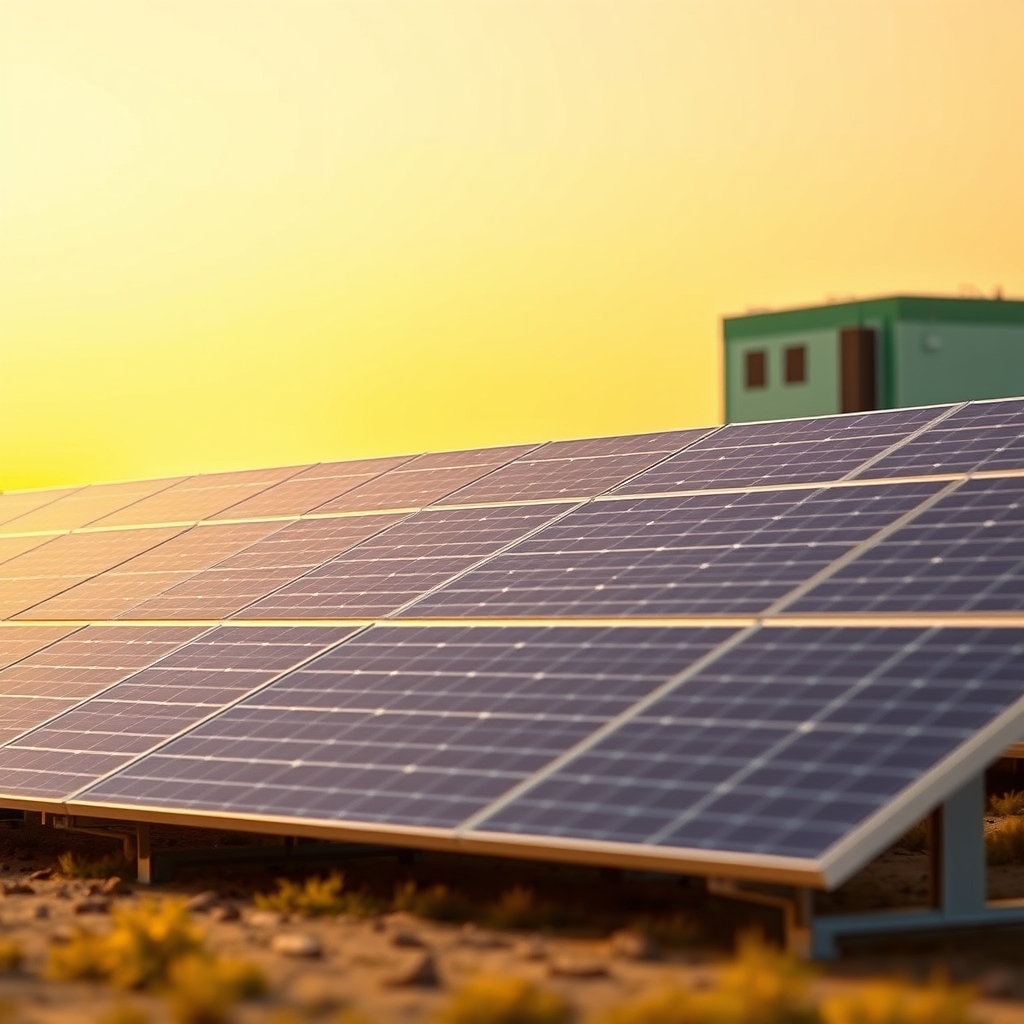
Abu Dhabi’s renewable‑energy push has taken a decisive step forward with the initiation of a massive solar project that spans more than 90 square kilometres in the Al Dhafra region. Designed to generate a continuous 1 GW of electricity, the farm will be coupled with the world’s largest lithium‑ion battery installation, a combination that promises to keep the lights on even after sunset. The development underscores the emirate’s ambition to diversify its energy mix, reduce carbon intensity and position the UAE as a regional hub for clean‑tech innovation.
Scale and Technology
The solar field will host roughly 4 million high‑efficiency photovoltaic panels, each tilted to capture maximum sunlight across the desert’s clear skies. Advanced tracking systems will rotate the panels throughout the day, boosting output by an estimated 25 percent compared to fixed‑tilt layouts. Once operational, the plant is expected to produce enough electricity to power over 300 000 homes, a figure that rivals the combined demand of several major UAE cities.
Complementing the solar array is a battery complex that dwarfs any existing storage facility in the region. With a capacity of 2 GWh, the battery can store surplus daytime generation and release it during night‑time or periods of low solar irradiance. The storage solution employs a modular design, allowing future expansion without disrupting ongoing operations. Engineers have also integrated sophisticated energy‑management software that balances supply and demand in real time, ensuring grid stability and minimizing curtailment.
Economic and Environmental Impact
From an economic perspective, the project represents a multi‑billion‑AED investment, drawing capital from both sovereign wealth funds and private‑sector partners. The construction phase alone is projected to create more than 5 000 jobs, ranging from skilled engineering roles to on‑site labor. Once fully commissioned, the facility will generate long‑term employment in operations, maintenance and data analytics, contributing to the UAE’s vision of a knowledge‑based economy.
Environmentally, the solar‑battery duo is set to offset roughly 1.5 million tonnes of CO₂ annually, equivalent to removing about 300 000 cars from the road each year. By delivering clean power directly into the national grid, the initiative reduces reliance on natural‑gas‑fired plants, which currently account for a substantial share of the country’s electricity generation. The project also aligns with the UAE’s Net‑Zero by 2050 roadmap, reinforcing commitments made under the Dubai Clean Energy Strategy 2030 and the Abu Dhabi Climate‑Change Programme.
Strategic Positioning and Future Outlook
Linking such a large renewable source with unprecedented storage capacity sends a clear signal to regional investors: the Gulf is ready to transition beyond hydrocarbon‑centric models. The project serves as a testbed for technologies that could be replicated across the GCC, where abundant solar resources and growing electricity demand create a fertile market for similar installations. Moreover, the battery’s scale demonstrates the feasibility of large‑scale load‑shifting, a capability that will become increasingly valuable as more intermittent renewables join the grid.
The initiative also dovetails with upcoming policy reforms aimed at encouraging private‑sector participation in the energy sector. Recent amendments to the UAE’s renewable‑energy licensing framework simplify permitting processes and offer incentives such as feed‑in tariffs and tax exemptions for projects that meet stringent sustainability criteria. These regulatory shifts are expected to accelerate the rollout of comparable ventures, fostering a competitive ecosystem that could drive down costs and spur innovation.
Looking ahead, several key milestones will shape the project’s trajectory. The first phase, targeting 250 MW of installed capacity, is slated for completion by the end of 2027, with full‑scale operation expected in 2029. Parallel to construction, a series of performance‑validation tests will assess battery efficiency, degradation rates and integration with the national transmission network. Results from these trials will inform future contracts, potentially unlocking additional financing from green‑bond markets and sovereign‑wealth entities keen on supporting low‑carbon assets.
What to Watch
Stakeholders should monitor three developments closely. First, the speed at which the battery achieves its projected 2 GWh output will influence confidence in large‑scale storage solutions across the region. Second, the cost per megawatt‑hour of stored energy will determine the economic viability of extending similar setups to smaller, distributed projects. Finally, the regulatory response, particularly any adjustments to grid‑access rules or renewable‑energy quotas, will affect how quickly other GCC nations can emulate Abu Dhabi’s model.
If the Abu Dhabi solar‑battery complex meets its technical and financial targets, it could become a benchmark for integrating renewable generation with massive storage, proving that the desert sun can indeed power the night. Such a success would not only reinforce the UAE’s sustainability credentials but also catalyze a broader shift toward resilient, low‑carbon power systems throughout the Gulf and beyond.