
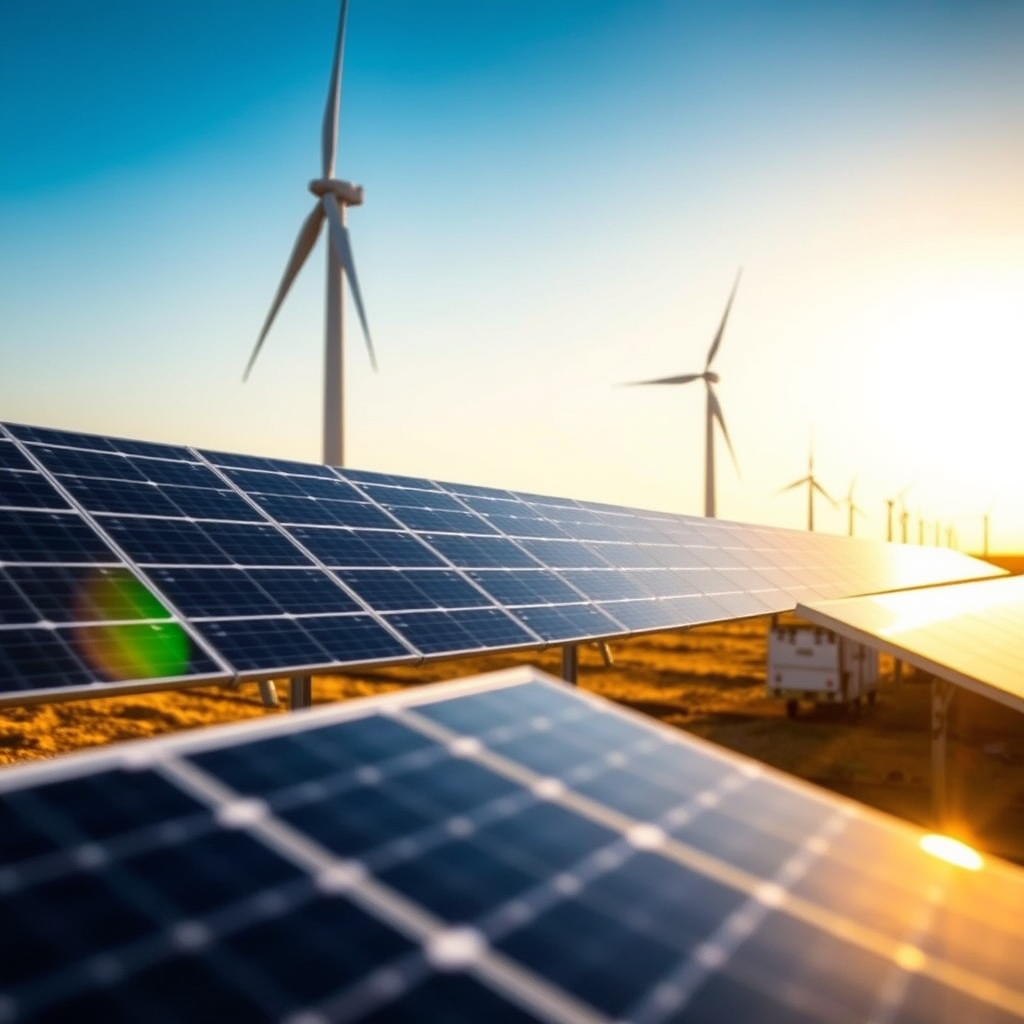
The UK’s planning authority has granted a development licence for the Dogger Bank South offshore wind farm, a 3 gigawatt (GW) project that will be built by a joint venture between German energy giant RWE and Masdar, the renewable arm of the Abu Dhabi‑based Mubadala Investment Company. For the UAE, the approval represents more than a new asset abroad; it underscores the nation’s strategy to become a global hub for clean‑energy expertise and to channel Gulf capital into high‑growth renewable markets.
Strategic Fit for Masdar’s Global Portfolio
Masdar’s involvement in Dogger Bank South aligns with its broader portfolio, which now spans solar farms in the Middle East, green hydrogen plants in Saudi Arabia and wind projects in Europe and the United States. The 3 GW capacity of the Dogger Bank South phase will generate enough electricity to power roughly 3 million homes, positioning the venture among the world’s largest offshore wind schemes.
Key benefits for Masdar include:
- Technology transfer: Working alongside RWE gives Masdar direct access to the latest turbine designs, digital asset‑management platforms and offshore construction techniques that are still emerging in the Gulf.
- Financial diversification: The project’s projected capital expenditure of around AED 14.8 billion (approximately USD 4 billion) diversifies Masdar’s revenue streams beyond its domestic solar and hydrogen assets.
- Exportable know‑how: Experience gained on the North Sea will be repackaged for future offshore wind bids in the UAE and Saudi Arabia, where governments are issuing tenders for multi‑GW coastal projects.
Masdar’s CEO highlighted that the partnership “accelerates our learning curve and strengthens our credibility when we approach new markets.” The joint venture will operate under a 25‑year power purchase agreement (PPA) with the UK’s National Grid, guaranteeing a stable revenue stream that can be leveraged to finance further Gulf‑based renewable projects.
Economic Ripple Effects for the UAE and GCC
The approval is likely to trigger a cascade of economic activity that benefits both the UAE and the wider GCC. First, the project will create a pipeline of skilled jobs in engineering, project finance and operations that can be filled by Emirati and regional talent trained through Masdar’s renewable‑energy academy. Second, the offshore wind sector’s supply chain, ranging from turbine blade manufacturing to subsea cabling, offers opportunities for GCC firms to expand into high‑value components, especially as the region invests in advanced materials and digital twins.
Furthermore, the deal reinforces the UAE’s ambition to attract FDI into clean‑energy infrastructure. By showcasing a successful offshore wind partnership in a mature market, Masdar can present a compelling case to international investors seeking exposure to the Gulf’s emerging renewable ecosystem. This could translate into additional capital inflows for projects such as the planned 2 GW Abu Dhabi offshore wind farm, which is currently under feasibility study.
The broader GCC also stands to gain. Saudi Arabia’s Vision 2030 and Qatar’s National Vision 2030 both earmark billions of dollars for renewable capacity, with offshore wind identified as a priority. The technical expertise and financing models honed on Dogger Bank South can be adapted to the Arabian Gulf’s unique conditions, accelerating the region’s transition away from hydrocarbon dependence.
Market Outlook and What to Watch
While the planning permission clears a major regulatory hurdle, the project still faces typical offshore wind challenges: turbine supply constraints, weather‑related construction windows, and the need for robust grid integration. RWE and Masdar have committed to a phased construction schedule that aims to bring the first turbines online by 2031, with full capacity expected by 2034.
Investors and industry watchers should monitor three key indicators over the next 12 months:
1. Supply‑chain contracts: Announcement of turbine and cable procurement deals will reveal the extent to which GCC manufacturers can capture downstream work.
2. Financing structure: Details on the debt‑equity split, especially any sovereign‑backed guarantees from the UAE, will signal the level of state support and risk appetite.
3. Policy alignment: Any updates to the UK’s offshore wind subsidy regime or to the UAE’s renewable‑energy incentives could affect project economics and set precedents for future cross‑border collaborations.
In summary, the Dogger Bank South approval is a milestone that extends Masdar’s footprint into one of the world’s most advanced offshore wind markets. The partnership not only diversifies Masdar’s asset base but also creates a knowledge conduit that can accelerate renewable‑energy deployment across the UAE and the wider GCC. As the project moves from planning to construction, the Gulf’s clean‑energy sector will be watching closely, ready to translate offshore wind expertise into home‑grown growth.