
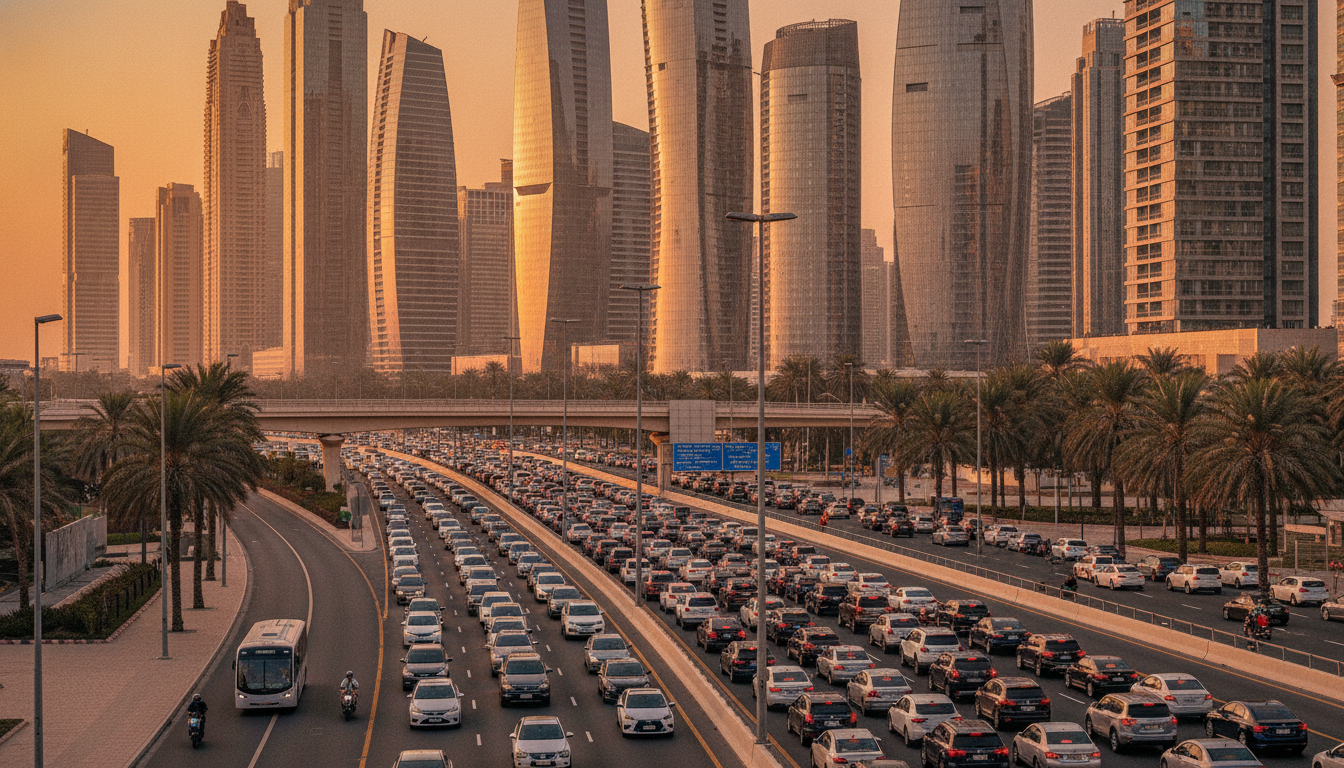
The daily reality of urban traffic congestion, particularly during peak hours, extends far beyond mere inconvenience for commuters in the UAE. For a nation committed to fostering a dynamic and diversified economy, the cumulative impact of gridlock represents a tangible economic challenge, affecting everything from business operational costs to overall national productivity. As the UAE continues its trajectory of rapid development and population growth, addressing the complexities of urban mobility through strategic investments and technological innovation becomes paramount to sustaining its economic momentum and enhancing the quality of life for its residents.
The Economic Toll of Urban Gridlock
Traffic congestion imposes a multifaceted economic burden on any thriving economy. In the UAE, where efficiency and connectivity are cornerstones of its business environment, delays on major arteries translate directly into lost productivity. Employees spending extended periods in transit are less efficient, impacting overall workforce output. For businesses, particularly those reliant on logistics and timely deliveries, congestion leads to increased fuel consumption, higher maintenance costs for vehicle fleets, and missed delivery windows, which can erode profit margins and customer satisfaction. The retail and service sectors also feel the pinch, as reduced accessibility and longer travel times can deter potential customers.
Moreover, the environmental costs, though often less immediately quantifiable in economic terms, contribute to a broader societal burden. Increased emissions from idling vehicles impact air quality, potentially leading to public health concerns and associated healthcare costs. From a macroeconomic perspective, persistent congestion can subtly diminish a city's attractiveness for foreign direct investment and talent, as businesses and skilled professionals often prioritize locations offering efficient infrastructure and a high quality of life. The UAE's ambitious vision for a knowledge-based economy, driven by innovation and global competitiveness, hinges significantly on its ability to ensure the seamless movement of goods, services, and people across its urban landscapes.
Strategic Investments in Smart Mobility and Infrastructure
Recognizing these challenges, UAE authorities have proactively invested heavily in advanced infrastructure and smart mobility solutions. Major cities like Dubai and Abu Dhabi have embarked on extensive projects to expand and modernize their road networks, while simultaneously developing world-class public transportation systems. The Dubai Metro, for instance, stands as a testament to this commitment, offering a reliable and efficient alternative to private vehicle use, complemented by tram services, an extensive bus network, and marine transport options. Similar initiatives are underway across the GCC, with Saudi Arabia and Qatar also making significant strides in urban transit development.
Beyond traditional infrastructure, technology plays a pivotal role. The integration of artificial intelligence (AI) and data analytics into traffic management systems is transforming how urban flows are optimized. Smart traffic lights that adapt to real-time conditions, intelligent parking solutions that guide drivers to available spots, and integrated transport platforms that provide real-time information to commuters are becoming increasingly common. These innovations aim to reduce bottlenecks, minimize travel times, and enhance the overall efficiency of urban transit. Furthermore, the UAE is actively exploring future mobility concepts, including autonomous vehicles and urban air mobility, positioning itself as a global testbed for these transformative technologies. This forward-thinking approach is crucial for future-proofing its urban environments against the pressures of continued growth.
Business Adaptation and Future Outlook
Businesses operating within the UAE are also adapting to the realities of urban congestion. Many companies have embraced flexible work arrangements, such as remote work and staggered office hours, to mitigate the impact of peak-hour traffic on their employees. Logistics and delivery firms are increasingly leveraging sophisticated route optimization software and real-time tracking to navigate congested areas more effectively, ensuring timely service delivery. The rise of last-mile delivery solutions, often utilizing smaller, more agile vehicles or even drones in some pilot projects, further illustrates the private sector's innovative response to urban mobility challenges.
Looking ahead, the challenge of managing urban traffic will only intensify as the UAE's population and economic activities continue to expand. However, the nation's proactive stance, combining substantial infrastructure investment with a strong embrace of technological innovation and supportive policy frameworks, positions it well to address these complexities. The ongoing development of smart city initiatives, the expansion of integrated public transport networks, and the exploration of cutting-edge mobility solutions are all critical components of a comprehensive strategy. By fostering seamless, efficient, and sustainable urban environments, the UAE aims to not only maintain its economic dynamism but also enhance the quality of life for all its residents, reinforcing its status as a leading global hub for business and innovation.