
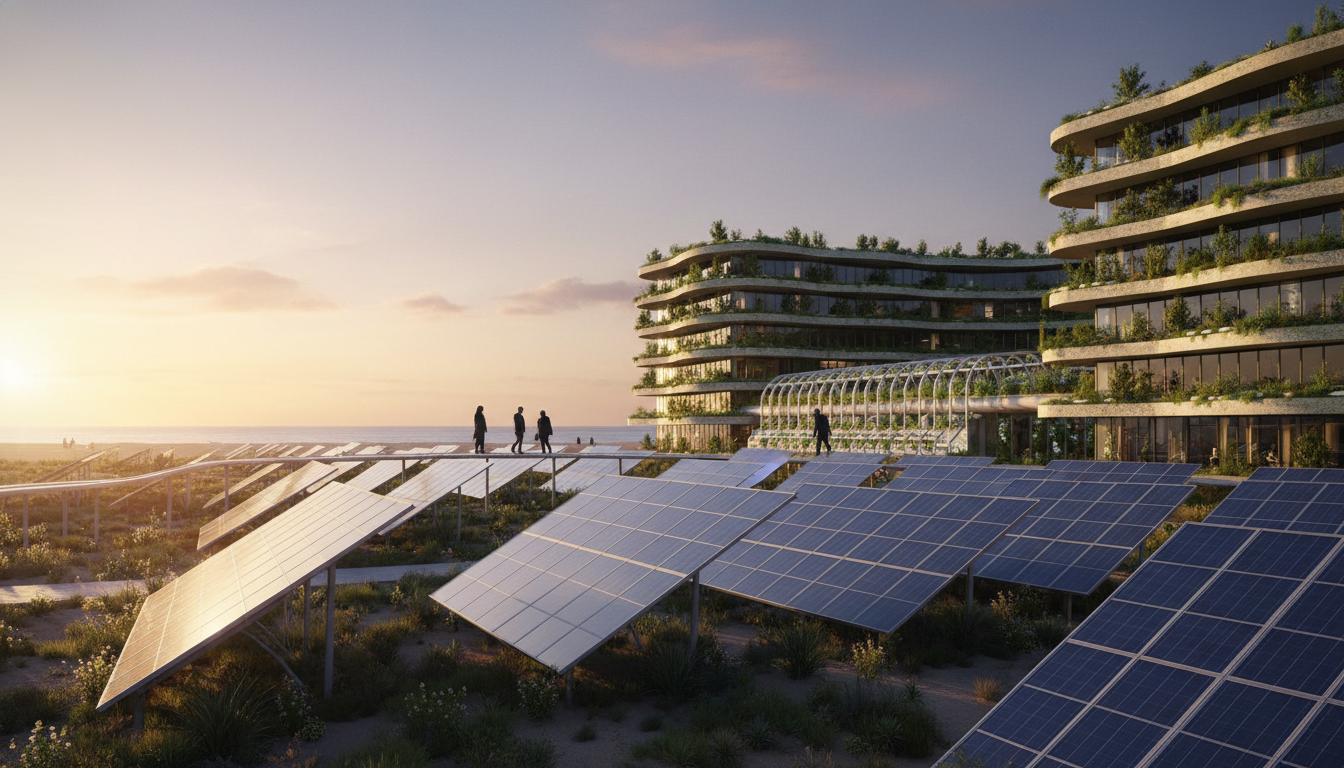
The Blue Economy and Finance Forum in Monaco gathered policymakers, investors and marine‑tech innovators under one roof. In her opening keynote, Shamma Bint Sultan Bin Khalifa, a senior member of the Abu Dhabi government, framed the Gulf’s maritime assets as a catalyst for diversified, low‑carbon growth. Her remarks underscored how the UAE intends to translate its extensive coastline, strategic ports and emerging marine‑technology sector into a measurable contribution to the national sustainability agenda.
Leveraging the Gulf’s Natural Assets
Khalifa began by quantifying the economic potential of the region’s waters. She cited recent estimates that the UAE’s blue‑economy market could exceed AED 30 billion by 2035, driven by activities such as offshore renewable energy, sustainable aquaculture, and marine biotechnology. The speaker highlighted three pillars that will shape this trajectory:
- Renewable offshore power , large‑scale floating solar and wind farms that complement the country’s solar‑desert strategy.
- Eco‑friendly fisheries and aquaculture , high‑tech recirculating systems that reduce pressure on wild stocks while meeting rising domestic protein demand.
- Marine research and innovation hubs , partnerships with universities and private labs to develop bio‑derived materials, carbon‑capture solutions and climate‑resilient ship designs.
By aligning these pillars with the UAE Vision 2030, Khalifa argued that the blue economy can become a “growth engine that does not compromise the environment.” She pointed to the Dubai‑based Marsa Al Arab initiative, which recently secured USD 150 million in private‑equity funding to pilot a hybrid solar‑wind platform off the Abu Dhabi coast. The project aims to supply clean electricity to nearby industrial zones while providing data for future offshore ventures.
Financial Instruments and International Collaboration
The Monaco forum also served as a showcase for new financing tools tailored to ocean‑related projects. Khalifa announced the launch of a Blue‑Economy Investment Fund managed by the Abu Dhabi Investment Office. The fund will allocate AED 5 billion over the next five years, targeting startups that demonstrate scalable solutions for marine waste reduction, desalination efficiency and sustainable tourism.
In addition to domestic capital, Khalifa emphasized the importance of cross‑border collaboration. She referenced a memorandum of understanding signed earlier this year between the UAE Ministry of Climate Change and the European Marine Research Alliance. The agreement will facilitate joint research grants, talent exchanges and co‑development of standards for marine carbon accounting.
Khalifa’s speech resonated with several European investors present at the forum. One senior partner from a leading Swiss asset manager remarked that the UAE’s clear policy signals and willingness to de‑risk early‑stage marine projects make the Gulf an attractive destination for impact‑focused capital. This sentiment aligns with a broader trend of ESG‑driven funds seeking exposure to sectors that combine profitability with measurable environmental outcomes.
What This Means for UAE Businesses
For local entrepreneurs, the keynote delivered a clear signal: the regulatory environment will become more supportive, and access to financing will improve. Khalifa outlined upcoming amendments to the UAE’s environmental licensing framework, which will streamline approvals for offshore renewable installations and introduce performance‑based incentives for companies that achieve carbon‑reduction milestones.
She also urged traditional oil‑and‑gas operators to diversify their portfolios by investing in marine technologies. “Our legacy energy firms have the engineering expertise and capital depth to lead the transition,” she said, citing examples of joint ventures already exploring offshore hydrogen production.
The emphasis on data and standards is another actionable takeaway. Khalifa announced the creation of a Marine Data Hub hosted within the Dubai International Financial Centre. The platform will aggregate satellite imagery, ocean‑sensor readings and climate models, providing a shared resource for investors, researchers and regulators. By standardising metrics such as marine biodiversity indices and carbon sequestration rates, the hub aims to reduce information asymmetry that has historically hindered investment in blue‑economy projects.
Looking Ahead
Khalifa concluded by projecting a timeline for the sector’s evolution. She expects the first wave of commercial offshore renewable farms to be operational by 2028, followed by a surge in marine‑biotech startups entering global markets by 2030. The speaker urged stakeholders to monitor three key indicators: the volume of private capital flowing into marine‑tech, the adoption rate of unified carbon‑accounting standards, and the pace of regulatory reforms that facilitate cross‑border project financing.
As the UAE positions itself at the intersection of finance and ocean stewardship, the next few years will reveal whether the blue‑economy ambition translates into tangible economic diversification and measurable climate benefits. Investors, policymakers and entrepreneurs alike will be watching the Gulf’s maritime transformation closely, ready to ride the tide of sustainable growth.