
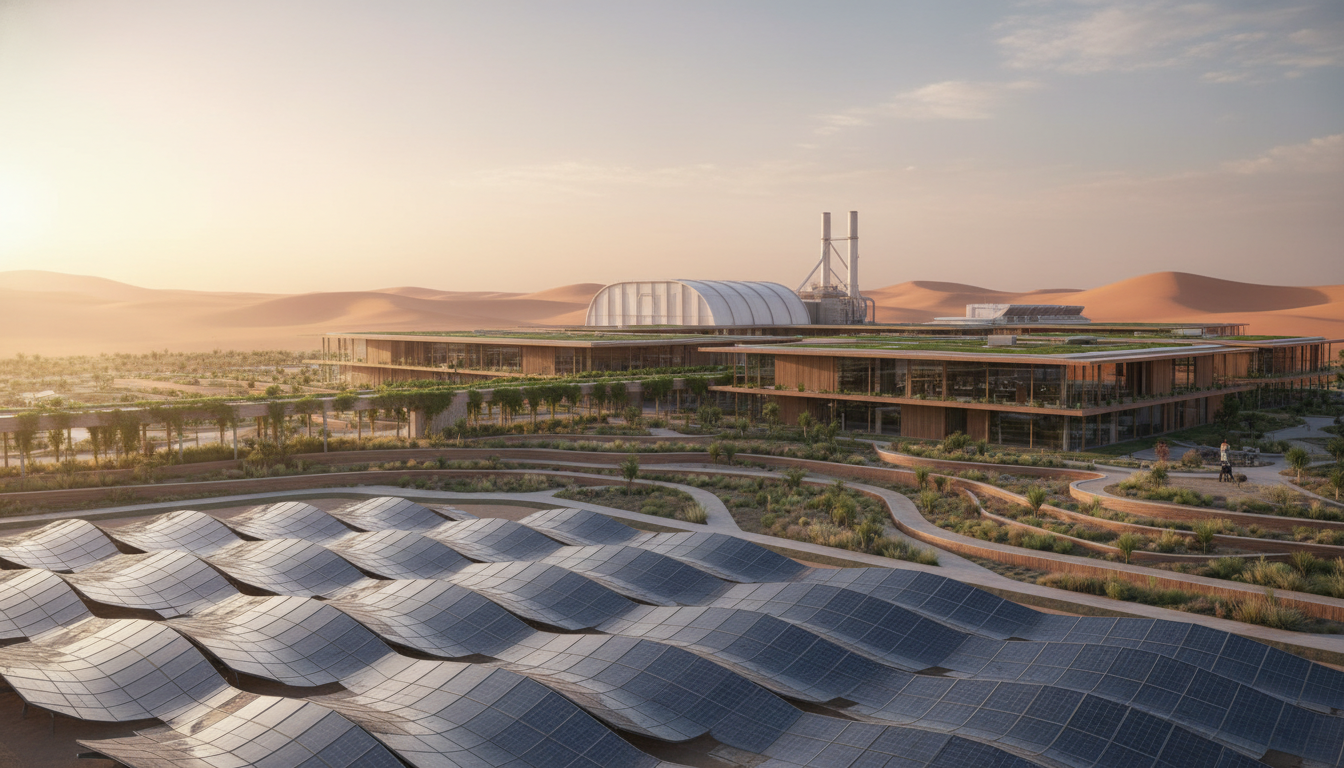
The Saudi government has announced plans to build a dedicated waste‑processing city near Mecca, with a target completion date in 2027. Designed to handle the massive volumes of solid waste generated by millions of pilgrims each year, the facility will span several square kilometres and incorporate advanced sorting, recycling and energy‑recovery systems. For the UAE, the project represents a regional market opening for firms that specialise in sustainable waste management, circular‑economy solutions and large‑scale infrastructure.
Regional Demand Drives New Infrastructure
The annual Hajj pilgrimage brings over two million visitors to Saudi Arabia, while Umrah sees a steady flow of millions more throughout the year. Current waste‑handling capacity in the holy cities is stretched thin, leading to concerns over environmental impact, public health and the reputation of the Kingdom as a destination for millions of faithful travelers. By constructing a purpose‑built city for waste processing, Saudi authorities aim to:
- Segregate organic, recyclable and hazardous streams at the source.
- Convert a portion of the waste into electricity and bio‑fuels through anaerobic digestion and waste‑to‑energy plants.
- Reduce landfill use and associated methane emissions, aligning with the Kingdom’s Vision 2030 sustainability goals.
The scale of the undertaking is comparable to other Gulf megaprojects, and the need for proven technology and operational expertise is acute. Emirati firms that have already delivered large‑scale waste‑to‑energy plants in Abu Dhabi and Dubai are being approached to bid for contracts ranging from engineering design to equipment supply and long‑term operations.
Emirati Companies Positioning for the Market
Several UAE‑based players have signalled interest in the Saudi project:
- Bee’ah, the Sharjah‑based environmental services group, has expanded its portfolio to include waste‑to‑energy facilities across the GCC. Its modular treatment units could be adapted for the high‑throughput requirements of the pilgrimage season.
- Masdar, the Abu Dhabi renewable‑energy pioneer, is exploring partnerships to integrate solar‑powered desalination and power generation within the waste‑processing complex, creating a closed‑loop energy system.
- Suez Middle East, a joint venture with local partners, brings decades of experience in mechanical‑biological treatment and could provide the sorting lines needed for rapid processing of mixed waste streams.
These companies are leveraging the UAE’s robust regulatory framework for circular‑economy initiatives, which has encouraged private‑sector investment and innovation. The government’s recent incentives for green technology, including tax exemptions and fast‑track licensing, make it easier for Emirati firms to export services and equipment to neighbouring markets.
Economic and Environmental Implications
From an economic perspective, the Saudi waste city is projected to generate thousands of jobs during construction and operation, with a sizable portion earmarked for skilled technicians and engineers. The ripple effect could boost demand for UAE‑based training providers and certification bodies that specialise in waste‑management standards such as ISO 14001.
Environmentally, the project aims to divert at least 70 % of pilgrim‑generated waste from landfills, converting a significant share into renewable energy. If the target is met, the facility could supply enough electricity to power thousands of homes, reducing reliance on fossil fuels and contributing to regional emission‑reduction commitments.
For the UAE, participation offers a dual benefit: it strengthens the country’s reputation as a hub for sustainable infrastructure while providing a new export market for green technologies. The collaboration also aligns with the broader Gulf strategy to diversify economies away from hydrocarbons and develop circular‑economy ecosystems.
What to Watch
The next six months will be critical as Saudi authorities release detailed tender documents and technical specifications. Emirati firms are expected to form consortia to meet the scale and complexity of the project, potentially involving European and Asian technology partners. Investors will be monitoring contract awards for indications of which waste‑management models, mechanical‑biological treatment, advanced recycling, or waste‑to‑energy, will dominate the hub’s design.
Stakeholders should also keep an eye on regulatory developments in both Saudi Arabia and the UAE that could affect cross‑border project financing, especially any new green‑bond frameworks or sustainability‑linked loan facilities. Successful execution could set a benchmark for future collaborative infrastructure projects across the Gulf, reinforcing the region’s transition toward a low‑carbon, resource‑efficient future.