Why Invoice Documentation Matters More Than Most Sellers Realize
For UAE and GCC-based sellers, sourcing inventory for global e-commerce channels like Amazon is just half the battle. The other half is proving where it came from. Amazon's Fulfillment by Amazon (FBA) program has become a critical revenue driver for regional sellers, but it comes with strict compliance requirements that hinge on a single document: the commercial invoice.
When Amazon flags an account for review (whether during initial gating, brand enrollment, or periodic audits), the first thing they request is invoices from your supplier. These documents serve as your proof of legitimacy—they demonstrate that you're sourcing from real businesses, not gray-market channels or counterfeit operations. Without them, your account can remain deactivated indefinitely.
What Exactly Is a Supplier Invoice?
A supplier invoice is a commercial document issued by a wholesaler or manufacturer after a completed transaction. It records what you bought, from whom, at what price, and when. This is fundamentally different from a quotation (a price estimate) or a proforma invoice (a preliminary document issued before payment).
The Eight Elements Amazon Requires
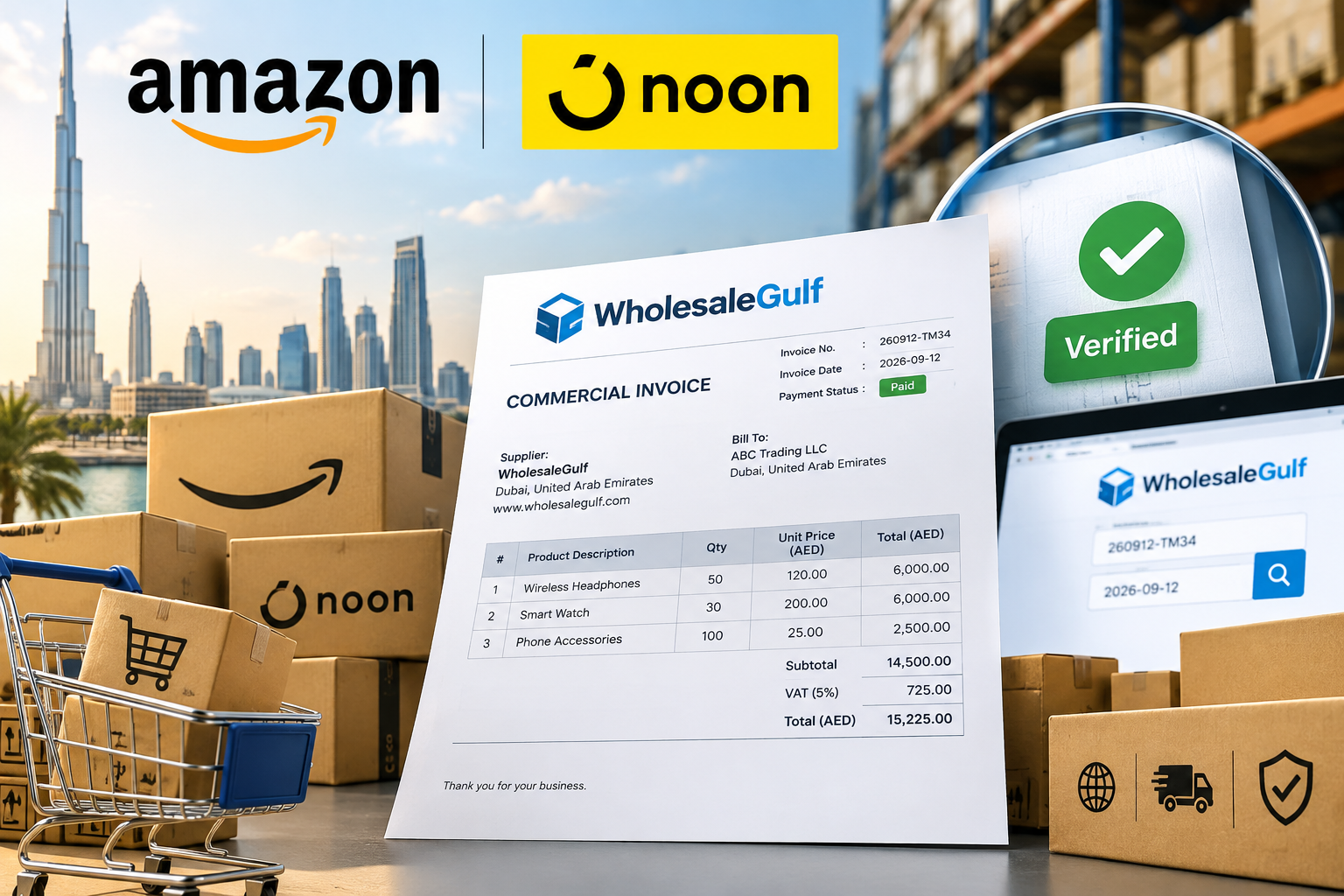
To pass Amazon's documentation review, your invoices must include: Supplier's legal business name, physical address, phone, and website; Your business name and address; Invoice number and invoice date; Product identifiers; Quantity purchased; Unit price and line totals; VAT or tax information; Payment evidence.
Seven Reasons Invoices Get Rejected
Falsified or Modified Documents, Self-Issued Invoices, Proforma or Quotation Use, Vague Supplier Information, Generic Product Descriptions, Insufficient Purchase Quantities, and Unverifiable Supplier Details are the top reasons for rejection.
The Digital Verification Advantage
Regional sellers have an edge: many GCC-based suppliers now offer digital invoice verification systems. Instead of relying on static PDFs, these platforms allow Amazon to verify invoices in real-time by invoice number or QR code.
Building a Bulletproof Documentation System
Don't wait for Amazon to flag your account. Organize your supplier documentation now with original invoices, payment confirmations, supplier contact records, product documentation, and shipping records.
The Bottom Line
By maintaining authentic documentation, choosing suppliers with robust verification systems, and organizing your records proactively, you're not just protecting your account—you're building the supply chain credibility that regional sellers need to scale globally.