

The projects form part of a comprehensive master plan to establish Al Quoz Creative Zone as an integrated creative hub catering to creatives from around the world, as well as entrepreneurs seeking to invest in the creative economy.
The zone offers a fully integrated ecosystem supporting all stages of the creative process—from design and production to exhibition and marketing—while providing affordable live-work opportunities within a partnership framework that supports commercial viability for developers and landowners.
Al Quoz Creative Zone also features dedicated venues for events and high-quality public spaces designed to encourage walking and active travel, reinforcing the area’s position as a year-round destination for cultural, educational, and recreational experiences.
Al Quoz Creative Zone in Dubai
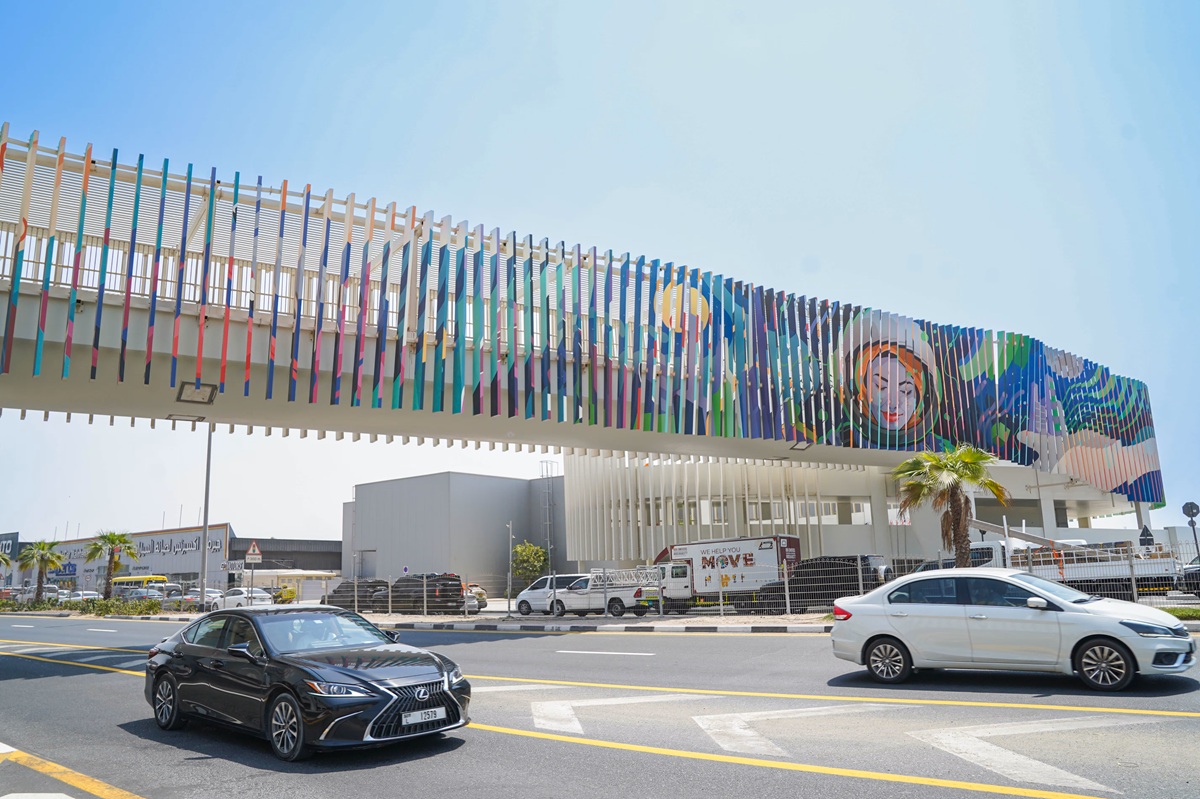
Among the completed projects is a pedestrian and cycling bridge on Al Manara Street, designed to enhance safety and ensure the smooth flow of pedestrian and cyclist movement within the area and its surroundings.
The bridge incorporates aesthetic design elements aligned with the zone’s identity and built environment. It measures 45m in length, 5.5m in width, stands 6m high, and includes two access ramps, each extending 210m.
RTA has also delivered three mobility hubs, alongside pedestrian and cycling tracks and individual mobility routes spanning a total of 4 km.
These initiatives enhance connectivity between Al Quoz Creative Zone, Onpassive Metro Station, and Al Quoz Bus Station, supporting seamless and efficient multimodal movement.
In addition, preparations have been completed for the implementation of the Super Blocks project in Al Quoz Creative Zone as part of Dubai’s master plan for developing pedestrian pathways across the emirate.
Super Blocks and cultural activation
The Super Blocks project introduces flexible urban spaces designed to host artistic events and cultural festivals, enabling the temporary closure of selected streets and their transformation into pedestrian-only urban oases during events.
Among these is Al Quoz Arts Festival, scheduled for January 24 and 25, organised by Alserkal Avenue in strategic partnership with Dubai Culture and Arts Authority (Dubai Culture).
The project supports the objectives of the Year of the Family, Dubai Social Agenda 33, and Dubai Urban Plan 2040 by strengthening social cohesion through the provision of recreational spaces that foster artistic and cultural engagement.
It also enhances quality of life in key attraction areas by transforming them into pedestrian-focused environments, reinforcing Dubai’s position as a globally recognised, pedestrian-friendly city.
The initiative further advances the 20-Minute City concept by encouraging environmentally friendly soft mobility modes, contributing to a sustainable, healthy, and low-carbon urban environment while supporting economic activity and unveiling new investment opportunities.
Integrated transport
Mattar Al Tayer, Director General, Chairman of the Board of Executive Directors of the Roads and Transport Authority (RTA), and Vice Chairman of the Higher Committee of Al Quoz Creative Zone, said: “The completion of the mobility projects reflects RTA’s approach to building an integrated transport system that facilitates movement, reduces reliance on private vehicles, and enhances urban mobility efficiency in a way that serves residents, visitors, and entrepreneurs.”
“Connecting Al Quoz Creative Zone to Al Safa Metro Station and Al Quoz Bus Station, along developing an integrated network of pedestrian, cycling, and individual mobility routes, forms part of RTA’s commitment to delivering people-centric mobility solutions that enhance quality of life across Dubai.
“The pedestrian and cycling bridge on Al Manara Street represents a valuable addition that enhances safety and traffic flow, while reinforcing the priority given to pedestrians and sustainable mobility.
“Meanwhile, the mobility hubs and internal pathways contribute to creating a connected, accessible urban environment that encourages walking and social interaction.”
“The Super Blocks project also supports targets of Dubai Urban Plan 2040 by embedding the 20-Minute City concept, enabling people to access work, services, and leisure within a compact and well-connected urban setting.”
Creative economy growth
Hala Badri, Director General of Dubai Culture, said that Al Quoz Creative Zone reflects Dubai’s ambition to position culture as a key economic driver, reinforcing the emirate’s standing as a global centre for culture, an incubator for creativity, and a thriving hub for talent.
“Through Al Quoz Creative Zone, Dubai has established a model that supports and empowers creatives, entrepreneurs, and investors while encouraging innovation. The zone provides a full range of facilities that nurture the growth of investment projects and add economic value to their output, drawing on the area’s unique assets.”
Badri added: “The completion of soft mobility and transport integration projects will further enhance the zone’s appeal. Dubai Culture remains committed to activating the area through high-impact initiatives and programmes that support innovators and highlight opportunities within the city’s cultural and creative industries. These efforts align with our focus on investing in young talent and consolidating Dubai’s role as a global hub for the creative economy.”
Scale, capacity and global positioning
Under the land-use master plan, the number of creatives operating in Al Quoz Creative Zone is expected to grow from 900 to 20,000 upon full implementation. The zone will also be able to accommodate 8,000 residents and attract around 33,000 visitors per day.
The plan includes a tenfold increase in studio and workshop spaces, a threefold expansion of leisure and support facilities, and a 30 per cent rise in leasable areas.
Compared with industrial districts dedicated to the arts worldwide, Al Quoz Creative Zone is set to rank among the largest globally in terms of built-up area and the number of practitioners it accommodates.
A distinctive planning code
A distinctive planning code has been introduced for Al Quoz Creative Zone, including integrated live-work environments and the provision of 2,900 affordable housing units for creatives.
The code places strong emphasis on public-realm design, with spaces capable of hosting artistic activities, cultural events, and product showcases.
It also includes the transformation of Sikeek (alleys) into shaded outdoor areas, alongside knowledge and exploration routes with recreational facilities.
Public plazas and shared open areas are designed for relaxation, social activities, and the display of art.
The master plan follows an innovative visual identity strategy, with sculptures, murals, and dedicated art routes distributed throughout the zone.
It preserves Al Quoz’s urban form and industrial character by repurposing existing warehouses, while infrastructure networks and preliminary plans have been prepared in coordination with all relevant authorities.
