

Much like the past two years, December is proving to be popular for VC funding. This week saw $93.1 million spread across energy infrastructure, agtech, legal AI and more.
IND Technology: $50 million

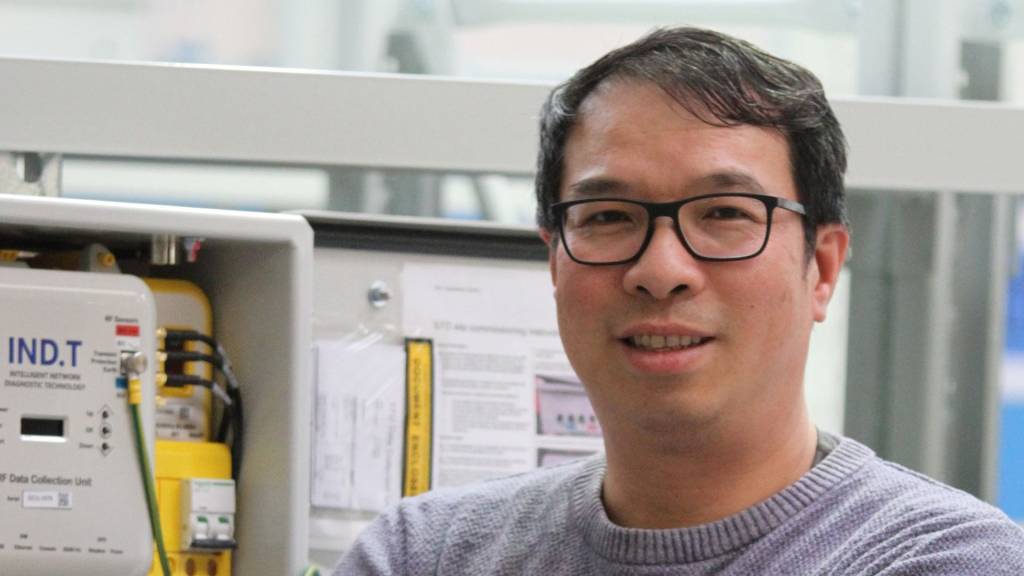
Leading this week’s funding round-up is energy technology startup IND Technology, which has raised $50 million in its first institutional funding round.
IND Technology was founded by RMIT professor Alan Wong following the 2009 Black Saturday bushfires. The startup is developing sensor-based monitoring systems that can detect early signs of electrical faults in energy networks in real time, before they turn into outages, incidents or fires.
The funding round was co-led by US energy specialists Angeleno Group and Energy Impact Partners. Virescent Ventures participated as the Australian partner, while Edison International, one of the world’s largest electric utility holding companies, also backed the company.
IND Technology says its flagship Early Fault Detection system has already helped prevent more than 500 fire events globally, with the company having sold around 15,000 detection units across deployments in Australia, North America and parts of Europe.
MEQ Solutions: $23 million

Red meat analysis and verification platform MEQ Solutions has raised US$15 million (AU$23 million) in a Series A round from New York software VC Insight Partners.
The agtech startup began life in Adelaide in 2016, with its first product, MEQ Probe, going on to raise $500,000 in late 2018 for industry trials.
MEQ has built the world’s only integrated hardware and AI software system to measure red meat quality and yield, digitising a process that up until now has been done manually using subjective visual grading.
The $1.5 trillion a year global red meat market is one of the few international supply chains still relying on manual, subjective inspections.
MEQ developed a range of tech products, including probes, cameras and analysis insights, using AI models and proprietary imaging to provide real-time data on quality, yield, and eating attributes of beef, all the way from live animal to the consumer product. Its video-based app, MEQ Camera, was recently certified by the United States Department of Agriculture for beef grading in a world-first.
The funding will be used to expand the team and deepen collaboration with industry partners.
LawVu: $9 million

New Zealand Legal technology platform LawVu has raised around $9 million in fresh funding as part of a growth milestone that also includes the acquisition of European contract automation company ClauseBase.
According to the company, the funding came from existing investors Movac and US-based Insight Partners. The company is now valued at approximately $350 million.
The raise coincides with LawVu’s acquisition of ClauseBase, which will be rebranded as LawVu Draft, and the launch of LawVu Lens, an AI-powered contract analysis engine embedded directly into its platform.
LawVu provides a single workspace for in-house legal teams, combining intake, matter management, contract workflows, document management and spend tracking, with AI now embedded across the platform.
The company says it recorded more than 50% global revenue growth in 2025, including 30% year-on-year growth in Australia, where customers include the AFL, Monash University, Tennis Australia and AMP.
The capital and acquisition will support LawVu’s international expansion and its push to offer an end-to-end AI legal workspace for large enterprise customers.
Ferronova: $6 million

Medical startup Ferronova has raised $6 million in a top-up to its five-year-old Series A to $17.5 million.
The fresh funding was led by existing investors Uniseed/UniSuper, South Australian Venture Capital Fund, Artesian Venture Partners, and Renew Pharmaceuticals, a subsidiary of Singapore-based Ultragreen.ai.
The Adelaide biotech, founded in 2016 as a spin-out from the University of South Australia and Victoria University of Wellington, NZ, uses magnetic nanoparticles for better cancer detection during surgery. The Series A began in 2020, with $3.5 million investment led by Uniseed, topped up in January 2023 with another $8 million, alongside a $1 million seed round and several million dollars in grant funding from the federal and South Australian governments.
Ferronova is pioneering a novel, image-guided surgery tracer to help pre-operatively identify areas where cancer may have metastasised.
Tiny magnetic particles, known as SPIONs (superparamagnetic iron oxide nanoparticles), bind to cells found in lymph nodes to help identify tissue that could contain cancerous cells. These help doctors address the problem that cancer cells are often not spotted by current imaging, and rogue cells may remain undetected in surgery.
The capital will go towards ongoing clinical trials and the commercialisation of the technology.
Real Flow Finance: $3.5 million
Property lending startup Real Flow Finance has secured $3.5 million to support product development and expansion.
The Sydney-based company, which operates a property cashflow finance platform, received the funding from real estate fintech Lyte in a deal arranged by Ad Astra Corporate Advisory.
Founded in 2013 by CEO Justin Steer, Real Flow provides financing to homeowners to cover upfront costs associated with selling a property, including listing fees, styling and minor renovations. It also offers commission advance products for real estate agents.
Real Flow says selling-related expenses can typically range from $5,000 to $10,000, creating cashflow pressure for vendors before a property settles.
As part of the deal, Lyte will integrate its technology into Real Flow’s platform while also providing capital to support ongoing product development.
The company has built a network of around 40,000 real estate agents through relationships with 2,000 property brokers across Australia and New Zealand.
Since launching, it has written more than 30,000 loans with a combined value of $250 million, and generated $7.5 million in revenue in the 2025 financial year.
Atrium: $1.3 million
Former Airtree investor Kevin Lu has secured $1.3 million in pre-seed funding for his personal CRM startup Atrium, including from his former employer.
According to Capital Brief, Airtree has backed Atrium alongside TEN13 and a group of unnamed US and Australian angel investors.
The idea for Atrium came to Lu while working at Airtree and seeing firsthand how challenging it can be for individual investors, founders and executives to manage networks with tens of thousands of contacts across multiple communications channels.
Atrium wants to ultimately build what is being called a ‘personal chief of staff’, powered by AI. The platform would bring together an integrated inbox and customer relationship management (CRM) tool with agentic automations, to help users get the most out of their networks.
Lu has founded the company alongside his brother Gerry Lu, who previously worked at Immutable, and Daniel Lum, a data engineer.
“AI gets louder nowadays; we need something to defend our time and help us focus on the people that really matter,” Lu told Capital Brief.
GenAqua: $300,000
Gold Coast-based healthtech startup GenAqua has raised $300,000 in pre-seed funding to support the commercialisation of its point-of-use water disinfection technology for hospitals and care facilities.
The raise was backed by angel investors, industry supporters and LX Health, a healthtech investment syndicate and accelerator.
Founded in 2023 by Scott Goulter, GenAqua is developing a compact UVC LED device that disinfects water directly at the tap, addressing bacterial contamination that can persist inside internal plumbing systems.
The startup was part of LX Health’s LuminaX Accelerator and was named Startup of the Year in the 2025 cohort.
GenAqua will use the funding to progress Watermark certification, prepare for manufacturing and support ongoing trials with Queensland Health’s Metro North Public Health Unit. The company is also exploring opportunities in Southeast Asia and plans to open its next capital raise in June 2026.
- This story first appeared on SmartCompany. You can read the original here.
