
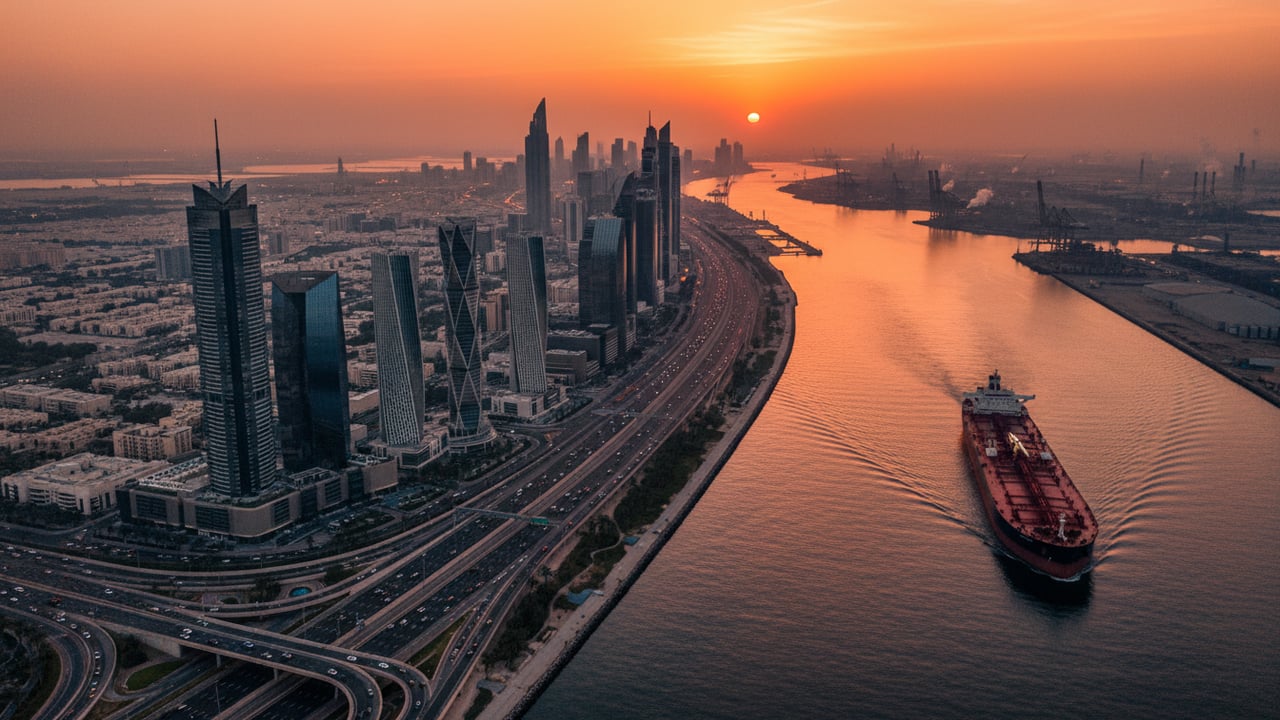
The Strait of Hormuz is set to remain effectively closed into the last days of May, according to Bloomberg, with flows projected to resume only in late May or early June. The disruption has lifted oil price forecasts to an average of $106 per barrel through May and June, with some Wall Street analysts modelling a path to $200 if the standoff drags on.
The immediate market response has come from US refiners, which are ramping output of gasoline, diesel and jet fuel to fill the supply gap. Over the past nine weeks, more than 250 million barrels of US crude have shipped overseas, making the United States the world's largest crude exporter and overtaking Saudi Arabia for the first sustained stretch in modern industry data.
What it means for the GCC
The picture inside the Gulf is more constrained. Bahrain, Kuwait and Qatar lack feasible bypasses to Hormuz, and some production has already been halted as onshore storage fills up. The UAE retains partial flexibility through the Fujairah pipeline route, although capacity falls well short of normal seaborne volumes. Saudi Arabia continues to push barrels via the East-West pipeline to the Red Sea, but those flows are not large enough to offset a prolonged closure.
For corporates, the immediate questions are around hedging exposure on freight, marine insurance and dollar-denominated input costs. Banks across the region have begun reviewing covenant tests on commodity-linked loans, with particular attention to mid-sized refiners and traders that locked in pricing earlier in the quarter.
Backdrop: the UAE's OPEC exit
The disruption arrives weeks after the UAE formally exited OPEC and OPEC+ on May 1, a move that gives Abu Dhabi greater latitude over its own production levels. The strategic logic looks more defensible in a tight market than it did during the calmer pricing of early 2026, although the political costs inside the cartel will take longer to settle.
The broader regional read connects to the industrial deals announced earlier this month at Make it in the Emirates and to the country's upgraded GDP forecast. A non-oil economy that has been growing faster than headline GDP gives the UAE a meaningful buffer, although a sustained Hormuz closure would still feed through to GCC-wide growth.
What to watch
Three indicators matter into late May. First, the trajectory of Brent and Dubai Mercantile front-month spreads, which capture how the market is pricing physical scarcity. Second, the volume profile out of Fujairah and the Red Sea, which signals how much workaround capacity is genuinely available. Third, the speed with which US refiner exports continue to fill the gap, which determines whether the price overshoot is contained or extended into the second half of the year.