

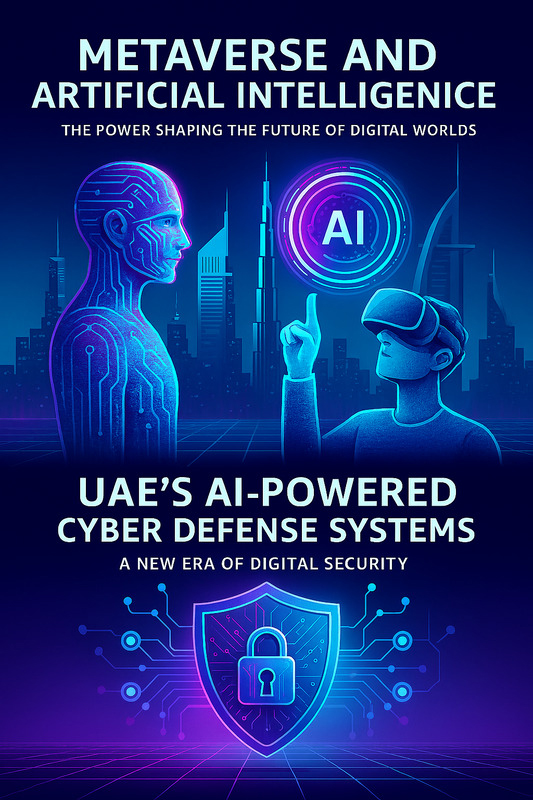
The United Arab Emirates (UAE) has become one of the most advanced countries in the world in recent years in terms of digitalization and technological transformation. As Dubai and Abu Dhabi continue their modernization process, ranging from smart city projects to blockchain-based public services, one of the most critical elements of this development has been their cybersecurity strategies. Increasing cyber threats and global digital risks are key factors that have encouraged the UAE to invest in AI-based defense systems. Today, the UAE is recognized as having the most advanced cybersecurity infrastructure in the Middle East and North Africa region, and much of this strength comes from AI-supported technologies.
You can easily explore relevant content on Press Release Network for more information about the UAE’s AI-powered cybersecurity projects and the latest developments
Why is cybersecurity important in a digitalizing economy?
The UAE has achieved significant growth in sectors such as finance, energy, logistics, tourism, aviation, and e-commerce through non-oil economic investments. As these sectors become more digitalized, the economic consequences of cyber threats have become increasingly severe. AI-powered attacks, ransomware, targeted intrusions on critical infrastructure, and state-backed cyber operations continue to rise. In response, the UAE is not only defending against these threats but is also aiming to establish a proactive cybersecurity ecosystem. At the heart of this ecosystem lies artificial intelligence. AI-based solutions not only detect threats in advance but also operate defense systems automatically at an optimal level, significantly reducing false alarm rates.
What are AI-based threat detection systems?
One of the UAE’s most important steps in its cybersecurity strategy has been the widespread deployment of AI systems capable of real-time threat analysis in both the public and private sectors. These systems scan incoming data within seconds, learn normal traffic behavior, and identify anomalies to prevent potential attacks before they even begin. Through machine learning algorithms, they analyze user behavior to classify suspicious activities and detect “zero-day” vulnerabilities that traditional security software might miss. These technologies are particularly critical for financial institutions, airports, the healthcare sector, and energy infrastructure, making the UAE’s digital ecosystem safer and more resilient.
The AI Structure of the National Cybersecurity Center
The United Arab Emirates’ National Cybersecurity Center (NCSC) stands out as one of the first regional organizations to make artificial intelligence a core component of cyber defense. The center has developed an AI-based detection network that operates in coordination with public institutions. This network enables the UAE to monitor cyberattack attempts nationwide in real time, analyze the sources of threats, and automatically implement countermeasures based on the assessed risk level. Thanks to this system, the UAE has transitioned to a proactive defense model that intervenes before attacks occur.
Protecting Critical Infrastructure with AI
Critical infrastructures such as power plants, oil refineries, water treatment facilities, and air transportation are of vital importance to the UAE. The industrial control systems used in these sectors are among the most frequently targeted systems worldwide. To prevent attacks, the UAE has developed AI-based security layers for SCADA systems, autonomous monitoring platforms, and machine learning tools that detect signal anomalies. AI-based solutions in Abu Dhabi’s energy infrastructure have reportedly reduced the percentage of successful attacks by up to 40%.
Human-AI Collaboration in Cyber Defense
Artificial intelligence does not fully automate cybersecurity; rather, it acts as a force multiplier that works in collaboration with human experts. In the UAE, next-generation Security Operations Centers (SOCs) implement a hybrid model where expert analysts work alongside AI systems. AI accelerates threat analysis, filters out false alarms to reduce analysts’ workload, and interprets large datasets to uncover attack chains. Humans, on the other hand, handle critical tasks such as decision-making, ethical assessment, and incident management. This model makes the UAE’s defense faster, more effective, and significantly more resilient.
The Future of Artificial Intelligence in Cybersecurity: UAE Vision
The UAE uses artificial intelligence in cybersecurity not only for today’s solutions but also to prepare against future risks. Within the framework of the country’s 2031 AI Strategy, it aims to expand AI-based cybersecurity platforms nationwide, transition 100% of public institutions to AI-supported security infrastructure, train more than 50,000 local experts in the field of cybersecurity and establish AI-based threat intelligence centers. These goals demonstrate the UAE’s desire to become not only a regional leader but also a global cybersecurity hub.
As a result, the UAE’s AI-powered cyber defense systems elevate the country above world standards in digital security. AI, replacing traditional methods that cannot keep up with the speed of attacks, provides a smarter, faster, and more effective security model. AI-based systems, used across a wide range from critical infrastructure to the financial sector, smart cities, and public services, ensure the UAE’s digital ecosystem is secure. The country, with its innovative approach, has established a strong position not only in cybersecurity but also in technological leadership. AI-powered defense systems will continue to be one of the strongest and most effective components of the UAE’s digitalization strategy.
Contributed by GuestPosts.biz

