

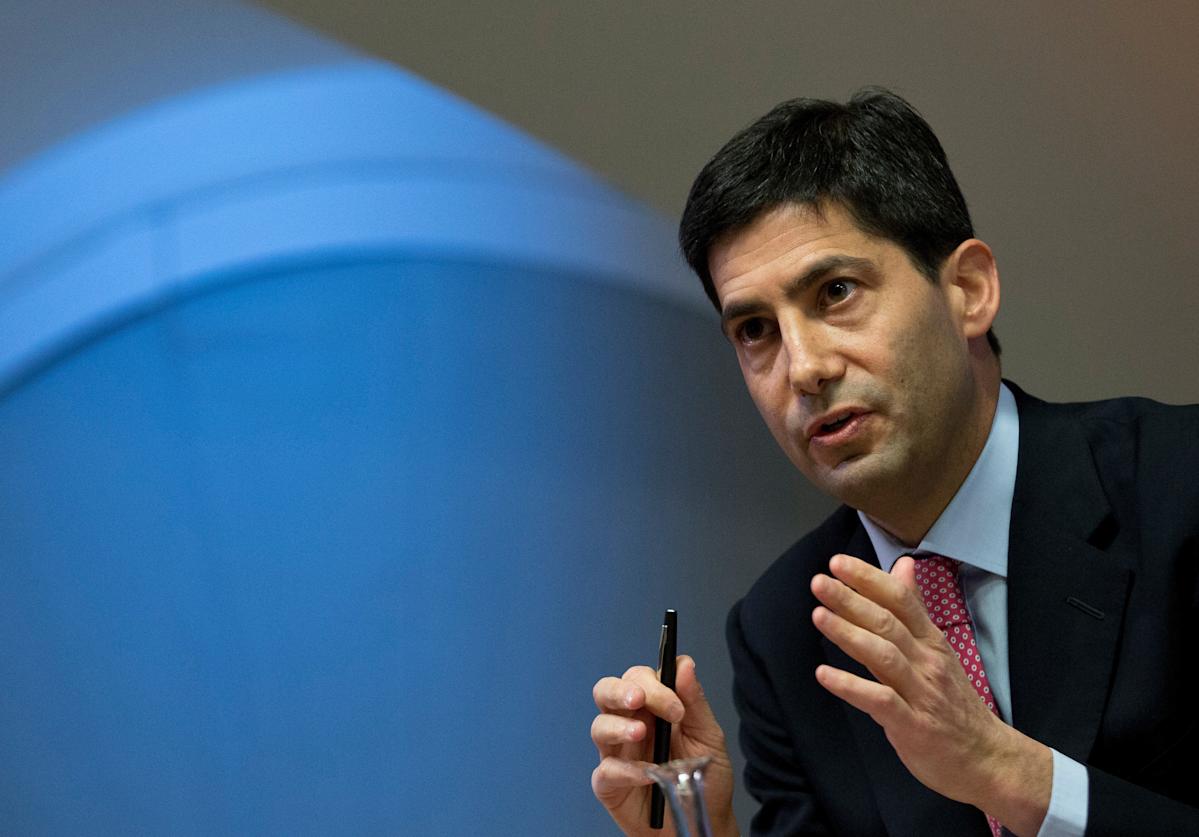
Kevin Warsh isn’t just a Federal Reserve nominee. He’s a catalyst for the spread.
Tim Spence, CEO of Fifth Third Bancorp (FITB), told Yahoo Finance’s Opening Bid that the prospect of a Warsh-led Fed creates a “pretty golden environment for banks.”
His optimism hinges on Warsh slashing interest rates while aggressively shrinking the Fed’s $6.6 trillion balance sheet. For an industry that makes its bread on the difference between short-term costs and long-term yields, “some steepness” to the curve — where rates stay above zero on the front end but rise on the back — is the ultimate profit engine.
Spence noted that a remade Fed would ideally separate monetary policy from fiscal policy, leaving the messy reality of structural deficits to politicians.
Yet, for much of Wall Street, this “golden” outlook could feel more like a “wash” waiting to happen. That’s largely due to the sheer difficulty of what Warsh is proposing.
According to an economics research report by Goldman Sachs economist David Mericle, Warsh’s plan to aggressively shrink the balance sheet faces a massive internal firewall. There is “strong support” within the Fed for the current “ample reserves” framework — a system Fed Chair Jerome Powell has spent his career fortifying. Mericle suggests that unless Warsh can dismantle the regulatory demand for bank reserves, his plan to pull the Fed out of the asset markets may be more rhetorical and “limited” than structural.
Then there is the shadow of Powell’s legacy. The transition is currently mired in a level of political friction rarely seen in central banking. President Trump’s nomination of Warsh serves as an implicit rejection of the Powell era, but the path to confirmation still faces a swamp of legal drama.
Read more: How much control does the president have over the Fed and interest rates?
Republican Sen. Thom Tillis has vowed to stall the process until a Department of Justice investigation into Powell is resolved. For investors, this creates a period of “lame duck” paralysis, in which the Fed’s direction is anyone’s guess.
This tension brings the Fed’s independence into the crosshairs. Warsh has praised the “good early work” of Vice Chair Michelle Bowman in crafting a new regulatory framework that favors small- and medium-size banks. While this sounds like music to a regional bank CEO’s ears, it raises red flags for those who worry that the Fed will become a tool for the executive branch’s deregulatory agenda.
