

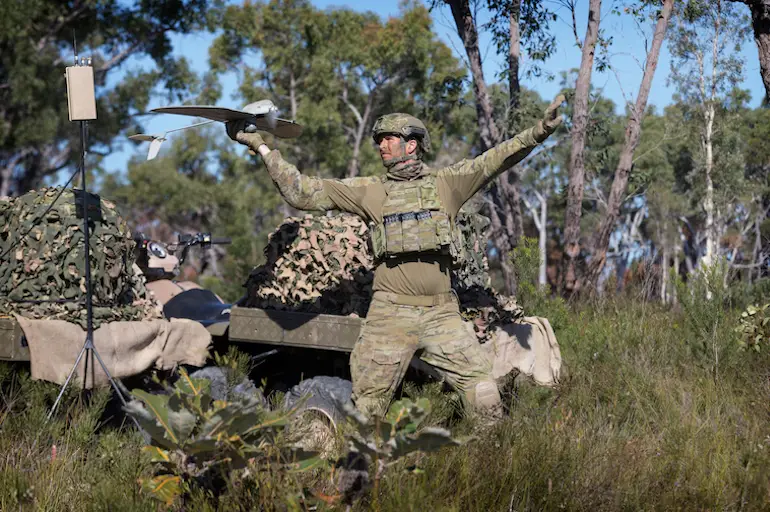
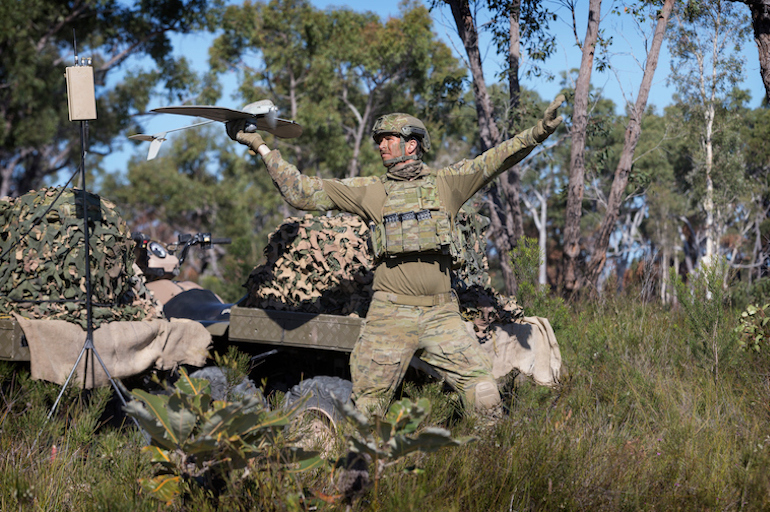
The federal government is keen to partner up with local venture capital firms, putting up to $500 million on the table as co-investment for Australian companies developing defence tech.
The Defence department has opened a Request for Expressions of Interest (REOI) on AusTender for private investors to back its Advanced Capabilities Investment (ACI) Fund.
The government may contribute a co-investment of up to $500 million into one or more ACI Fund(s) to finance Australian companies developing defence and dual-use advanced capabilities.
Defence is on the hunt for venture investors to establish and manage an ACI Fund(s) to back SMEs and startups in areas such as cyber, artificial intelligence and autonomy, electronic warfare, quantum technologies, and undersea warfare, with a focus on export potential.
That also includes what the REOI euphemistically calls “kinetic and kinetic-enhancing advanced defence capabilities” – the military term for missiles, bombs, bullets, artillery, and armoured vehicles.
The REOI phase is open until April 30.
Defence industry minister Pat Conroy said joint investment between the government and private sector could drive jobs and innovation.
“In developing potential options for co-investment, the government is looking for ways to catalyse growth of Australia’s innovation ecosystem, sovereign industry capability and exports potential,” he said.
“The Government will explore options to partner with private capital to invest in eligible Australian small and medium enterprises that are developing the capabilities we need.”
Investment underway
Many Australian startups are already working in the defence space, partnering with the US military, including Advanced Navigation which has been working with US Defense on GPS-jamming countermeasures, and drone and robotics startup Breaker, which last week banked a $9 million Seed.
Meanwhile, Australian Defence has been buying chips from Silicon Quantum Computing, and last year Brisbane aerospace startup Hypersonix Launch Systems banked a $46 million Series A with the government-backed National Reconstruction Fund a key investor.
American investors have been key backers of local defence tech, local investors have been slower off the mark and VC’s big three – Blackbird, Airtree and Square Peg – have largely eschewed the defence sector, with the exception of dual-use technology, primarily because superannuation funds that are key investors in the VC funds have their own governance policies precluding weapons investment.
One of the few contrarian advocates for defence investment is Steve Baxter, who cofounded Beaten Zone Venture Partners in 2025, and is building a $60 million war chest to back defence startups globally. Last year BZV was part of a $5 million raise for defence surveillance startup Arkeus, alongside CSIRO-backed Main Sequence.
The cap table for Beaten Zone – a military reference to them pattern formed when munitions hit their target or the ground – also include simulation platform Nominal Systems, and HEO, the Sydney space tech imaging startup monitoring activity in Earth’s orbit.
