

We really are living in a fascinating time for the sector, where so many ideas and trends are actively affecting the way games are made, the way we play them, and the overall health of the industry.
There’s a lot to talk about. So let’s get into it.
Here are the big questions that I think will shape gaming this year.
Will the gaming industry continue to try to hike prices?

I hate to put my pseudo-economist hat on, but inflation is back on the agenda in 2026. That means interest rates, globally, are more likely to go up rather than down. Put simply: there’s a world in which most consumers have less money to spend this year than they did last year.
The gaming industry somewhat stalled on hiking prices. While console and device prices certainly went up, game prices attempted to mirror this then retreated. The rise of indie and AA gaming is putting price pressure on major titles. Case in point: Avowed will release on the PlayStation 5 next month at a cheaper price point than when it launched on the Xbox last year.
I personally think any bold price rises will be put on hold for 2026. But I can’t argue that the gaming industry has done a fantastic job of educating many major commentators and journalists on how inflation works, and why gaming is great value as a result. If that’s a key PR message for the industry, its sinking in. I’m hearing the argument in a lot of other gaming media I consume, from reporters and commentators, the kind I wouldn’t expect to hear it from.
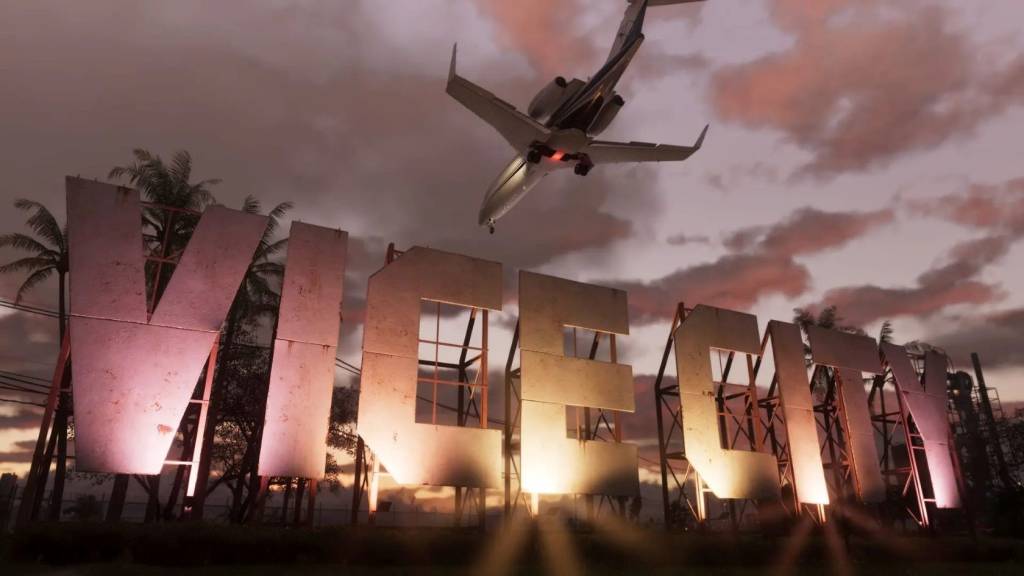
Will Grand Theft Auto 6 finally come out?

Yeah, sorry. Can’t help but mention this.
It’s been delayed twice in a year. Now it’s slated for 19 November 2026. At this point it’s anyone’s guess as to whether it will see the light of day.
Why does this matter? Well, nobody wants to compete with it for attention or player time when it launches, given Grand Theft Auto 5 is one of the best-selling games of all time.
What will the Steam Machine cost? And when will it launch?

So far, all reports are positive when it comes to the Steam Machine. Closed-door press and influencer demos happened late last year, and there’s little in the way of criticism for the device.
It’s slated for release early this year, but like most things in gaming, there’s no release date or pricing as of yet. It’s interesting to see one of the largest pioneers of PC gaming move into the console market. The play here is to functionally pull more console-oriented gamers into Steam’s PC-oriented ecosystem. There are fundamental differences between the pair: PCs are incredibly customisable, consoles tend to run a simpler plug-and-play experience. Australian developers are also red hot on this devices launch. As one told me last year: “It feels like Valve’s Wii moment… That kind of swing is what our industry needs right now.”
I think it’s really easy to write off console gaming. The sector’s most vocal proponents (streamers, journalists, and writers) are largely PC gamers. Many may ask if there’s even a market here? Who is this device for? If you have a gaming PC, do you really need another box near your TV for the occasional party game?
But it’s worth noting, consoles and PC are neck and neck in terms of total revenue generated for the gaming industry.

Will Nintendo hit its record-setting sales target for the Switch 2?
Last November Nintendo revised its Switch 2 sales target from 15 million in its financial year, ending March 2026, to 19 million. That’s significant, because selling 15 million units within nine months was already the most ambitious global console sales target we’ve ever seen. For context: the Switch 2 is already the fastest-selling console, shipping over 3 million units in its first days of sale, despite hiking the entry price of the console.
As The Game Business reported this month, there may be cause to cast doubt on the gaming giant achieving its goal, with Switch 2 sales actually slowing over the typically hectic Christmas period. That may be due to a lack of games on the device. As of today, there are only a handful of Switch 2 exclusive games, three that are dedicated, popular Nintendo intellectual property.
True to its marketing calendar, Nintendo typically hosts a big Direct broadcast within the next month or so ahead of its financial results. This will give us a better idea of what’s coming on the new console in the year ahead.
Will PlayStation release (another) portable console?
Not to be outdone by both Nintendo and Steam, I’d expect to hear some news out of Sony this year about a new piece of hardware. While the safer take is perhaps news on the long-rumoured PlayStation 6. But it’s a wonder whether this 2024 report from Bloomberg on a portable console that can play PS5 games on the go will eventuate into something official?
Will Microsoft announce anything? Other than new games or shuttering more studios?
Honestly, it’s anyone’s guess as to what Microsoft will do this year, as it focuses more on publishing games and its Game Pass offering over its hardware. The tech giant’s all-in approach on generative AI also has plenty of people in gaming nervous.
The big question is whether Game Pass will launch on any other platforms, maybe on Playstation or Nintendo Switch? Possibly on Steam’s devices.
Will AI continue to polarise the gaming industry?

In the short term, yes. In fact, I’d expect hatred within the gaming communities online to intensify in the coming months. Major publishers will likely lead the way here, placing a bet on some titles that audiences won’t care about it.
We’ve already seen this with Embark Studios’ Arc Raiders, a very popular new extraction shooter. And all it really does is set the internet on fire. They used generative AI to mimic voice actors, and add in lines from them into the game. Yet, despite the uproar and panning from major global gaming media outlets, Arc Raiders has seen commercial success.. Will this open the way for the bar to be pushed even further?
Quietly, I see the arguments moderating in some circles, albeit behind closed doors. Even in my interviews late last year, developers spoke to me more about how they can effectively use the technology in gaming, to enhance what they are doing rather than turn it into slop. Is there a path forwards? Does it allow smaller studios to create at a scale and quality seen with larger productions?
Or will it just allow larger studios to shed cost or as one dev put it to me last year, “lobotomise” existing creative roles?
There’s also a level of fear that by using this technology, any game maker will be punished by players and industry reviewers. Given how polarised the discussion is, that’s a very warranted fear right now too.
We’re in that murky in-between period. It could really go either way — and my only horse in this race is the health and longevity of the industry. That doesn’t make for a good headline, but perhaps is a better reflection of what’s actually going on.
What even is an ‘indie’ game?

It used to be pretty clear-cut.
But as the category grows, and lines start to blur, the definition is starting to lose its meaning. Does it come down to how many people made the game? Its total budget? Or is it based on the genre of the game, or a title doing something unique within gaming?
Categorising games has always been fraught, especially when you consider that some of the best games take a genre, and then break the rules defining it.
Clair Obscur: Expedition 33 winning best indie at The Game Awards last year somewhat blew up this debate. And while it is somewhat meta within the gaming industry, expect to hear more about it in the year ahead.
Can anyone follow up Hollow Knight: Silksong? What’s next for Team Cherry?

Turning our gaze to the Australian market, I’d love to see another game released this year that once again puts us on the map for game development.
While Silksong’s launch is the elephant in the room, our region had plenty of smaller wins last year too, with the success of Cast and Chill featuring on the global Steam Store and The Drifter’s strong launch. Cult of the Lamb’s new expansion, Woolhaven, is also imminent.
I just don’t want to write off the work of Team Cherry’s achievement with two games as a once-in-a-lifetime moment for the Australian games industry. It’s not.
But it’s a genuine shame that Hollow Knight’s global success, akin to that of other cultural exports like Bluey and Crocodile Dundee, hasn’t triggered a renewed focus from policymakers on bolstering — and capitalising on — the local games industry. In some parts of the country, it’s going the opposite direction.
For Team Cherry, the Adelaide-based studio, the focus will now move to what the additional downloadable content for Silksong will look like. And you can bet that will trigger another wave of global interest and hype. But, beyond this, for the sake of being left alone by global press and content creators, I really hope Team Cherry do not announce another game, and just work on their next project—if there is another one — in stealth!
Will Australia’s social media ban ricochet into gaming?
This is something I’m keeping a close eye on this year. Especially as more mainstream media in Australia turn their gaze towards platforms like Roblox, and other online spaces where minors interact.
It’s an interesting slippery slope. You can communicate with other people, like social media, via online games. But then at what stage do messaging platforms or even text messaging itself get woven into the mix?
I’m not going to wade too far into this, as I think it’s best left for the experts to weigh in. But Australia is very much the canary in the coal mine regarding this policy. Other countries like the UK, US and Canada are watching us with intense interest.
Are big-budget AAA games dead?
That’s the hottest of takes from Clair Obscur: Expedition 33, a lower-budget, AA game, winning game of the year. And plenty of big-budget games were cancelled last year.
But personally, I think the gaming industry is at its best when there’s a mix. Big-budget games push the industry forward in interesting ways. As do indies, and lower-budget titles. All have their place.
There is no formula for success, and given the growing development time for games, any attempt to predict the market on the back of current trends will likely just be plain wrong.
And lastly, what about the elephant in the room? Game discovery.
I ran an interesting experiment on my way back launching Infinite Lives this year. I asked all my readers to let me know the game they were most looking forward to in 2026. I was hoping to get enough replies to chart it, but even so it wouldn’t be very useful. That’s because aside from a few mentions of Grand Theft Auto 6, almost everyone who got back to me mentioned a different game. Not all of them new either. Here’s a few that came up in the replies:
- Trails of the Sky, 2nd Chapter
- Resident Evil 9
- Mario Tennis Fever
- Moomin
- Menace
- Mars Tactics
- Dinkum
- Phantom Blade Zero
- Bradley The Badger
- Grim Dawn: Fangs of Asterkarn (Expansion)
- Exo Rally Championship
- Alabaster Dawn
Many of these don’t have release dates. And others told me they just want to make it through their ever-growing back catalog of unplayed game purchases.
This, for me, speaks to one of the biggest challenges in gaming right now: choice. There’s an abundance on it, and standing out is harder than ever. For gamers, that’s fantastic. If you want a weird niche game that mixes platforming with survival horror, it likely exists. But for any game to succeed, it needs a critical mass of purchases. Making a successful game genuinely feels like holding a winning lottery ticket.
Moreover, there’s a new theme encompassing all entertainment sectors: attention. The proliferation of streaming, games, podcasts, music, social media even articles on this platform. It all soaks up time to consume.
Netflix now sees YouTube — not any of the other myriad streaming services — as its largest competitor. Major game developers are eyeing the same two platforms as a key reason for lower engagement with their titles. There’s only so many eyeballs out there for all content, regardless of the medium.
I’d expect to hear more about this throughout the year, as all entertainment industries attempt to grapple the existential threat of costs outpacing the attention, and facing new rivals in all verticals.
Infinite Lives is working towards supporting video game journalism in Australia. If you enjoyed this post, consider pledging a subscription for a later date.
